
PART OF · OEM Mining Ground Support Procurement
Xianhong Mining prepares quotations from the buyer-provided drawing revision, specifications, quantity, inspection and documentation requirements, packing model, destination, and commercial basis available at the time of quotation. Assumptions, exclusions, and proposed deviations should be stated in the quotation. Final production is controlled by the buyer-approved order documents. This article provides general procurement guidance. Final supplier selection, contract terms, and supplier suitability for a specific project remain the responsibility of the buyer and the buyer's authorized procurement and technical personnel.
Two suppliers return quotations for the same mining ground support order. Supplier A offers a unit price 15% lower than Supplier B. The buyer awards the order based on that number. Later, the buyer discovers that Supplier A quoted an alternative material grade, excluded the requested third-party inspection, used FOB rather than the destination-port basis used by Supplier B, and did not include the specified export packing.
The apparent saving was not created by better manufacturing efficiency. It was created by a different technical and commercial scope.
A quotation is not a single number. It is a package of product assumptions, manufacturing scope, inspection obligations, documentation, packing, delivery terms, payment terms, lead time, and exclusions. Those elements must be placed on the same basis before price comparison becomes meaningful.
A unit price is comparable only when the scope behind it is comparable.
1. Why Unit Price Alone Is Not Enough
A unit price is the final result of many upstream decisions. It reflects the supplier's interpretation of the drawing, the material and tolerances assumed, the production quantity, the services included, and the commercial and delivery terms used to build the cost.
When any of those variables differ, the two unit prices are not measuring the same offer.
A lower quotation may reflect:
- a different material grade or standard;
- a wider tolerance assumption;
- a different coating type or thickness;
- exclusion of samples, first-article inspection, or third-party inspection;
- reduced documentation or traceability scope;
- lower-cost packing;
- a different Incoterms basis or named delivery point;
- a different payment schedule or quotation-validity period.
None of those differences automatically makes the lower quotation unacceptable. But each difference must be visible. A buyer cannot evaluate value when the basis of the price is hidden or assumed.
The first rule of quotation comparison is therefore not "find the lowest number." It is "confirm that the numbers describe the same requirement."
2. Confirm That the Technical Basis Matches
Before comparing price, confirm that every supplier quoted the same product and the same acceptance basis. The review should be made against the current RFQ, drawing revision, technical specification, and agreed clarification record.
Check at least the following:
- Drawing number and revision: Did every supplier quote the same revision?
- Units and unit of measure: Is the offer per piece, set, kilogram, tonne, metre, or package?
- Material grade and standard: Did each supplier quote the specified grade and standard, or propose an alternative?
- Dimensions and tolerances: Are critical dimensions and tolerance assumptions the same?
- Surface treatment: Are coating type, thickness, finish, and referenced standard identical?
- Thread specification: Are thread form, pitch, tolerance class, direction, and applicable standard the same?
- Interfaces: Are mating nuts, washers, bearing plates, barrels, wedges, or other connected components based on the same interface requirements?
- Quantity and order structure: Is the price based on the same total quantity, batch size, release schedule, and minimum order quantity?
- Inspection and acceptance criteria: Are suppliers quoting against the same inspection points, sampling basis, and pass/fail requirements?
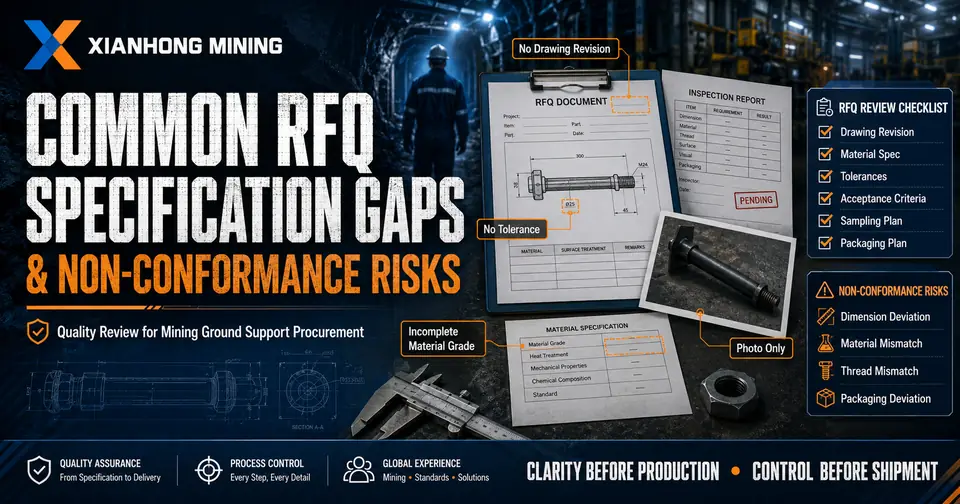
Where the drawing or RFQ is incomplete, the supplier should state the quotation assumption rather than silently applying a default. The buyer can then confirm the assumption, issue a clarification, or request a revised quotation.
A technical deviation does not always require rejection. It does require written identification and buyer approval before the quotation can be treated as technically equivalent.
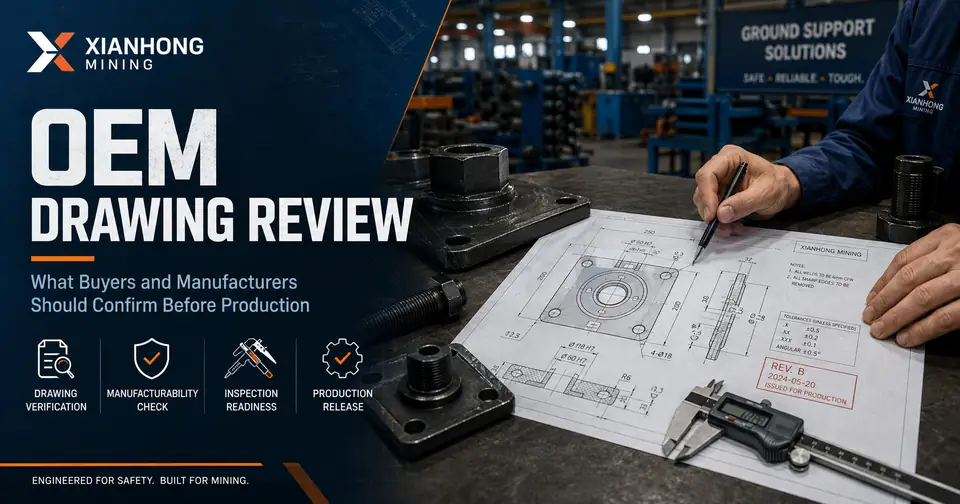
For guidance on resolving drawing assumptions before production, see the OEM Drawing Review Guide.
3. Separate Unit Costs from Tooling, Samples, and One-Time Charges
OEM quotations often contain costs that occur once rather than on every unit. Typical examples include:
- tooling and dies;
- jigs and inspection fixtures;
- setup or programming charges;
- sample manufacture;
- trial-batch production;
- first-article inspection;
- special test preparation;
- buyer-specific label or artwork setup.
Suppliers may present these costs differently. One supplier may charge tooling as a separate fixed amount. Another may amortize it across the first order. A third may include it in the unit price but require a new charge when the drawing changes.
The buyer should ask each supplier to state:
- which costs are one-time and which are recurring;
- whether the unit price includes amortized tooling;
- who owns the tooling after payment;
- whether the tooling is reusable for repeat orders;
- expected tooling life or maintenance responsibility;
- whether revision changes may require new tooling;
- whether sample and first-article costs are refundable or credited after approval.
This information affects both the first order and the repeat-order economics. A supplier with a higher first-order price may become more competitive on repeat orders if the tooling is reusable and recurring unit costs are lower.
4. Compare Inspection, Testing, and Documentation Scope
Two suppliers can quote the same product and still include very different verification scope.
The buyer should confirm whether each quotation includes:
- Standard in-process controls: What routine dimensional or process checks are included?
- Final inspection: Is the basis buyer-specified sampling, 100% inspection of selected characteristics, or the supplier's normal inspection plan?
- First-article inspection: Is it required, what characteristics are reported, and is approval needed before batch production?
- Witness or hold points: Must production stop for buyer or third-party review at any stage?
- Third-party inspection: Who appoints the inspector, who coordinates access, and who pays the fee?
- Inspection reports: What report format, measurements, photographs, and traceability fields are included?
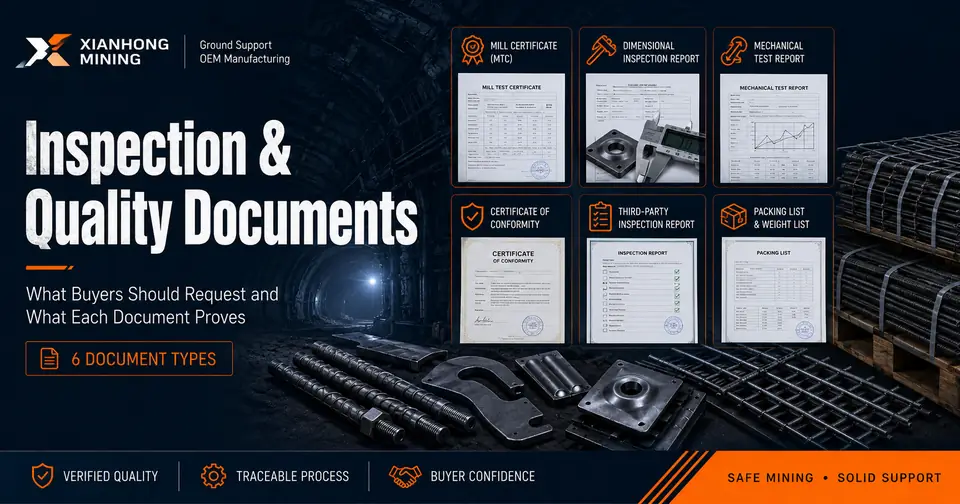
- Material documentation: Is a material certificate, mill certificate, or supplier declaration required, and how is it linked to the production batch?
- Test reports: Are mechanical, coating, weld, load, or other agreed tests included?
- Conformity documents: Is a declaration or certificate required by the contract, and what exactly does it cover?
The term "inspection included" is too vague for comparison. The quotation should identify the inspection basis and the records supplied.
Commercial export documents should also be separated from quality evidence. A certificate of origin, commercial invoice, packing list, or shipping document serves a different purpose from a material certificate or inspection report. Both may affect price, but they should not be treated as interchangeable.
For a detailed explanation of document scope and evidentiary limits, see Mining Ground Support Quality Documents.
5. Normalize Packing, Freight, and Incoterms to a Common Point
Packing and delivery terms can create a larger price difference than the product itself. A fair comparison therefore requires the same packing specification and the same delivery point.
Confirm the following:
- Packing specification: Is export packing included? Are bundle weight, pallet type, corrosion protection, waterproofing, labels, and buyer marks defined?
- Palletizing and loading: Are palletizing, container loading, blocking, bracing, and loading supervision included?
- Incoterms rule and version: Does the quotation state the rule, the precise named port or place, and "Incoterms® 2020"?
- Transport mode: Are the selected terms appropriate for the transport mode?
- Freight and insurance: Are they included, itemized, estimated, or excluded?
- Destination charges: Are terminal handling, import clearance, duties, taxes, unloading, and inland delivery included or excluded?
- Named destination: Are all suppliers quoting to the same port, warehouse, or project location?
FOB and CIF are rules for sea and inland waterway transport. DAP can be used for any mode of transport. Under DAP, the seller delivers the goods at the named place on the arriving means of transport, ready for unloading; import clearance and import duties remain on the buyer's side unless the contract states additional arrangements.
Incoterms rules allocate delivery obligations, costs, and risk. They do not by themselves create a complete landed-cost calculation. A true landed cost may also include destination handling, customs brokerage, import duties and taxes, inland transport, financing costs, and other buyer-side charges.
Example: Normalize to the Same Destination Port
Supplier A quotes FOB Tianjin, Incoterms® 2020 at USD 4.20 per unit. Supplier B quotes CIF Durban, Incoterms® 2020 at USD 4.80 per unit.
The two prices cannot be compared directly. The buyer first adds Supplier A's estimated freight and insurance to the same named destination port. If those items add USD 0.70 per unit, Supplier A's normalized cost to Durban becomes USD 4.90 per unit.
At that comparison point, Supplier B is lower at USD 4.80 per unit - provided that packing, insurance basis, quantity, product specification, and other included services are also equivalent.
This is a normalized port-cost comparison, not yet a full landed-cost comparison to the buyer's warehouse.
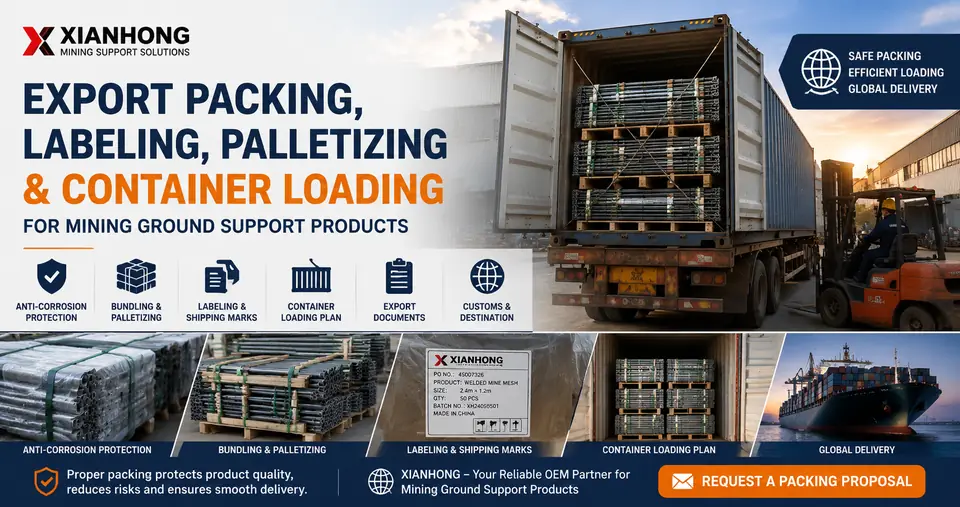
For packing and loading requirements, see the Export Packing Guide.
6. Compare Payment Terms, Currency, Lead Time, and Quote Validity
Commercial terms change the real cost and usability of a quotation.
Payment Terms
Compare:
- deposit percentage;
- balance-payment trigger;
- letter-of-credit or bank-charge requirements;
- payment currency;
- responsibility for bank fees;
- whether the price assumes a particular exchange rate;
- whether early payment or credit terms affect price.
A lower unit price requiring a larger advance payment may create a different cash-flow and supplier-risk profile from a slightly higher price with staged payment.
Lead Time
Record both the number of days and the start trigger. Examples include:
- after purchase-order confirmation;
- after deposit receipt;
- after approved drawing release;
- after sample approval;
- after receipt of buyer-supplied material or artwork.
"30 days after order confirmation" and "30 days after drawing approval" are not the same commitment. The drawing-review cycle can materially change the actual shipment date.
Quote Validity and Adjustment Terms
Confirm:
- quotation-validity period;
- whether raw-material changes may trigger repricing;
- whether freight is fixed or subject to reconfirmation;
- whether exchange-rate movements may change the offer;
- whether the quoted price applies only to one shipment schedule or quantity release.
A quotation that cannot remain valid through the buyer's approval process may not be actionable, even if the current unit price is attractive.
7. Record Technical Deviations, Commercial Exclusions, and Document Priority
Every quotation should state whether it is:
- quoted fully to the buyer's stated requirements;
- quoted with technical deviations;
- quoted with commercial exclusions;
- based on assumptions requiring buyer confirmation.
A deviation list should identify:
- the affected drawing, specification, or RFQ clause;
- the proposed alternative;
- the reason for the proposal;
- the expected manufacturing, inspection, interface, cost, or lead-time implication;
- the buyer approval required before the deviation becomes part of the order.
The manufacturer may explain manufacturability, inspection feasibility, and component-interface implications. Final acceptance of any change affecting product selection, support performance, or site suitability remains with the buyer and the qualified project authority.
Silence should not be treated as proof of compliance. The buyer should request either:
- a completed deviation schedule; or
- a written statement that the quotation is based on the listed specifications with no stated deviations.
The quotation should also identify the document hierarchy. If the RFQ, drawing, email clarification, and purchase order conflict, which document takes precedence? Without an agreed order of precedence, a technically complete quotation can still become an ambiguous order.
8. Build a Like-for-Like Comparison Table
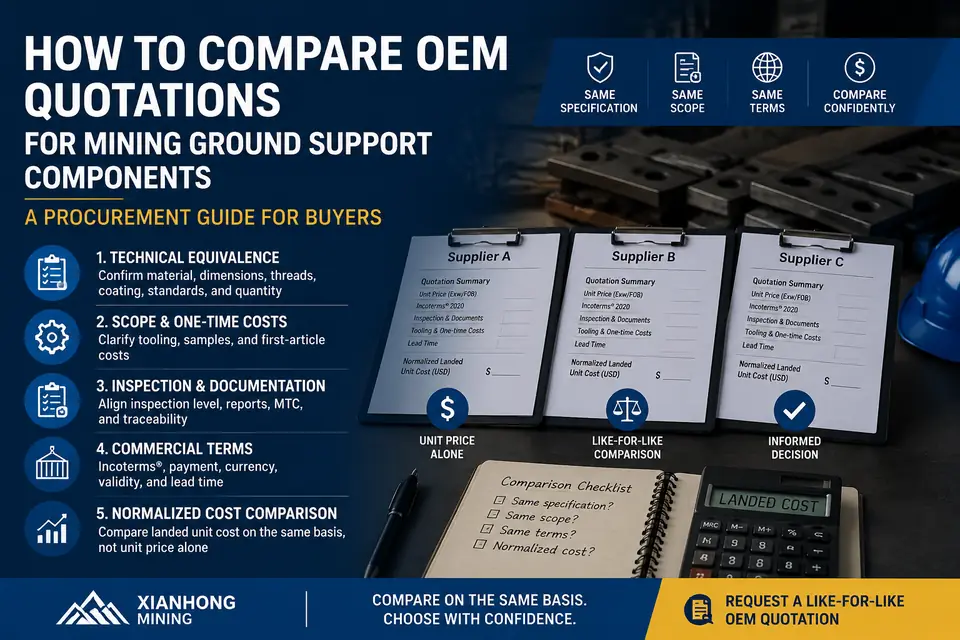
Once technical scope, one-time costs, verification, packing, delivery, payment terms, lead time, and deviations have been confirmed, place all offers into a single comparison table.
| Comparison Field | Supplier A | Supplier B | Supplier C |
|---|---|---|---|
| Quotation date and currency | |||
| Unit of measure | |||
| Quantity and batch basis | |||
| Drawing number and revision | |||
| Material grade and standard | |||
| Critical tolerance assumptions | |||
| Surface treatment | |||
| Thread and interface specification | |||
| Unit price as quoted | |||
| Tooling and one-time costs | |||
| Tooling ownership and reuse | |||
| Sample / first-article scope | |||
| Inspection and testing included | |||
| Documentation included | |||
| Packing and marking included | |||
| Incoterms® 2020 rule and named place | |||
| Freight and insurance | |||
| Buyer-side destination cost estimate | |||
| Payment terms | |||
| Lead-time start trigger | |||
| Quote validity | |||
| Technical deviations | |||
| Commercial exclusions | |||
| Normalized cost to common point | |||
| Estimated landed order cost, if complete |
The normalized cost is a key commercial field, but it is not the only selection criterion. It should be evaluated only after technical compliance, deviations, verification scope, lead time, and supplier risk have been reviewed.
A quotation with an unapproved technical deviation should not be ranked as equivalent merely because its normalized cost is lower.
9. Common Quotation Comparison Mistakes
The following errors repeatedly create false price comparisons:
- Comparing different Incoterms bases directly. FOB, CIF, and DAP do not represent the same cost point or obligation split.
- Omitting the named port or place. "FOB China" or "DAP buyer warehouse" is incomplete without a precise named point.
- Calling a port-cost comparison "landed cost." Import clearance, duties, taxes, terminal charges, unloading, and inland delivery may still be missing.
- Ignoring tooling ownership and reuse. A low first-order price can conceal repeat-order tooling costs.
- Assuming identical words mean identical specifications. Terms such as "galvanized," "high-strength steel," or "standard export packing" require definitions.
- Treating supplier silence as compliance. A missing deviation statement is not the same as confirmed compliance.
- Comparing different inspection scopes. Supplier-standard inspection and buyer-specified inspection plans may carry different costs and evidence.
- Comparing lead times with different start triggers. The same number of days can produce different shipment dates.
- Ignoring payment terms and currency exposure. Commercial financing can change the effective cost and risk.
- Selecting by normalized cost before technical approval. Price comparison should follow technical-equivalence review, not replace it.
10. Final Buyer Review Before Supplier Selection
Before supplier selection, confirm that:
- the same drawing revision and technical specification were quoted;
- unit of measure, quantity, batch size, and release schedule match;
- technical deviations and assumptions are written and evaluated;
- one-time and recurring costs are separated;
- tooling ownership, reuse, and maintenance are clear;
- inspection, testing, and document scope are defined;
- packing and marking requirements are equivalent;
- the Incoterms® 2020 rule and precise named place are recorded;
- quotations are normalized to the same comparison point;
- payment terms, currency, lead-time trigger, and validity are compared;
- buyer-side destination costs are included when claiming landed cost;
- supplier selection is made only among technically acceptable offers, unless an approved deviation changes the basis.
The purpose of the comparison table is not to make every supplier look identical. It is to make every difference visible.
Once those differences are visible, the buyer can decide whether a higher price pays for a broader scope, lower execution risk, faster delivery, stronger documentation, or a technically closer match - rather than assuming that the lowest quoted unit price is automatically the best value.
Frequently Asked Questions
Can FOB and CIF quotations be compared directly?
No. They first need to be normalized to the same named destination port and the same packing, freight, insurance, quantity, and technical basis. FOB and CIF also allocate cost and risk differently under Incoterms® 2020. A normalized destination-port cost is still not necessarily the full landed cost to the buyer's warehouse.
Is the lowest normalized cost always the best quotation?
No. Normalized cost should be compared among technically acceptable offers. Inspection scope, deviations, tooling ownership, lead time, payment terms, documentation, and execution risk may justify a different supplier decision.
How should an alternative material grade be compared?
The supplier should identify the proposed grade, standard, reason, and any manufacturing or interface implications. The buyer and the responsible technical authority must approve the alternative before the quotation can be treated as equivalent to the original specification.
Should tooling cost be included in the unit price?
Either structure can be used, but the quotation must make it visible. The buyer should know whether tooling is a fixed charge, amortized into the unit price, reusable, buyer-owned, supplier-owned, maintained for repeat orders, or replaced after a defined life or drawing revision.
Download the OEM Quotation Comparison Checklist
Use the printable checklist to align technical specifications, one-time costs, inspection scope, documentation, packing, Incoterms, payment terms, lead time, deviations, and normalized cost before supplier selection.
Download Xianhong Oem Quotation Comparison Checklist 2026 08 (PDF)
Conclusion
A like-for-like quotation comparison is not a price-ranking exercise. It is a controlled process for confirming that technical requirements, manufacturing scope, verification, packing, delivery, and commercial terms are understood on the same basis.
When the basis is aligned, a price difference becomes meaningful. When the basis is not aligned, the lowest number may simply represent the narrowest or least-defined scope.
Request a Like-for-Like OEM Quotation
Send the current drawing revision, required specifications, quantity, destination, inspection level, documentation list, packing requirements, and preferred Incoterms basis.
Xianhong Mining can review the quotation inputs and provide an itemized commercial offer showing applicable tooling, sample, inspection, documentation, packing, and logistics costs, together with stated assumptions and deviations.
Related Resources
- OEM Mining Ground Support Procurement
- Common RFQ Specification Gaps
- OEM Drawing Review for Mining Ground Support Components
- Mining Ground Support Quality Documents
- Export Packing, Labeling, Palletizing and Container Loading
- OEM Manufacturing Process
- Custom Ground Support Manufacturing
This article provides general product and procurement information. Final product selection, support design, installation method, and suitability for site conditions must be confirmed by the buyer and a qualified project engineer. Destination-country import, certification, tax, customs, and legal requirements must be confirmed by the buyer, importer, customs broker, or appointed freight forwarder before production and shipment.
Sources and evidence basis
- ICC Incoterms® 2020external
- Xianhong Mining OEM Manufacturing Processinternal
- OEM Mining Ground Support Procurementinternal