
Disclaimer: This article explains common export packing and shipment preparation practices for mining ground support products. Customs clearance requirements, import regulations, and destination-country compliance remain the responsibility of the buyer, importer, or appointed customs agent.
An order is confirmed. The buyer asks: "When can you ship?" The manufacturer replies: "Before shipment, we need to confirm the packing proposal --- anti-corrosion method, bundle sizes, labeling, container type, and destination requirements."
Production completion does not always mean shipment readiness. Export packing is a coordinated process covering corrosion protection, bundling, labeling, container planning, and shipment documentation. This guide lists the seven confirmation fields that a buyer or distributor should address before shipment can be arranged.
What Does Export Packing Involve?
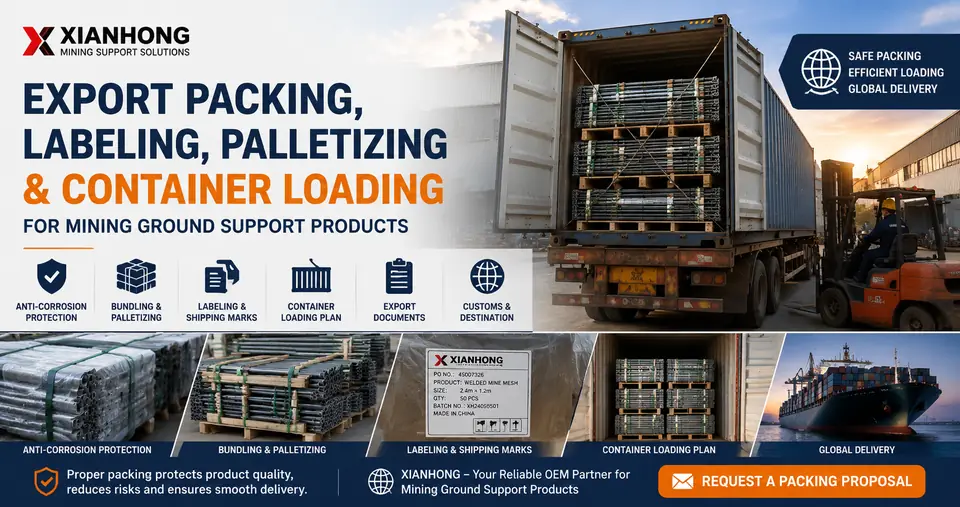
Export packing for mining ground support products is not a single step. It is a sequence: production completion → corrosion protection → bundling and palletizing → labeling → container loading → export documentation. Each step depends on the product type, the destination, and the agreed order requirements.
This article does not cover incoterms negotiation, freight insurance, or port operations. It focuses on what the buyer and manufacturer need to confirm so that the manufacturer can prepare the shipment.
Export Packing Confirmation Checklist
# Field Why It Matters Risk If Missing Buyer Should Confirm
1 Anti-Corrosion Prevents rust Corrosion Protection method and
Protection during sea damage, expected conditions
freight rejection at
destination
2 Bundling and Determines Handling Bundle size, Palletizing handling and damage, weight, and pallet container fit inefficient type loading
3 Labeling and Identifies Misdelivery, Label content, Shipping Marks products at customs delays language, and destination marking format
4 Container Type Determines Low Container type and Loading Plan logistics utilization, (20GP/40GP/40HQ) and efficiency higher freight loading arrangement cost
5 Export Documents Required for Shipment held at Document list and who customs port prepares each clearance
6 Destination Port Determines Customs Import rules, and Customs compliance rejection, certifications, and Requirements needs fines restricted items
7 Special Handling Covers Loading Product-specific Requirements oversized or failure, damage handling, heavy items in transit over-length, over-weight
1. Anti-Corrosion Protection
Anti-corrosion protection prevents rust during sea freight and storage. Common methods may include VCI paper, desiccants, oiled surfaces, or other protection methods depending on the product type, voyage duration, storage conditions, and buyer requirements.
Why it matters: Sea freight exposes products to humidity and temperature changes. The selected protection method should match the expected transportation conditions, storage environment, and buyer requirements. A method suitable for a 7-day voyage may not be sufficient for a 45-day voyage with transshipment.
Risk if missing: Products arrive with rust or moisture damage. For example, a shipment of bearing plates packed with basic oil protection may arrive with surface rust after a 45-day voyage with two transshipments --- requiring reconditioning at the destination port before customs will accept the cargo. The buyer rejects the shipment or requires reconditioning at significant cost.
What the buyer should confirm:
- Expected voyage duration and whether transshipment is involved
- Storage conditions at destination (indoor, outdoor, duration)
- Whether a specific protection method is required
- Whether the buyer or manufacturer supplies protective materials
2. Bundling and Palletizing
Bundling determines how products are grouped for handling. Palletizing determines whether products are placed on pallets, in frames, or strapped directly. Bundle size and weight affect how many units fit per container and how easily they can be unloaded at destination.
Why it matters: For distributors, bundle size and weight directly affect container utilization and handling cost at the destination. A bundle that is too heavy for the destination's forklift capacity cannot be unloaded without special equipment. Returning to the buyer who asked "when can you ship?": the answer also depends on bundle sizes --- if the buyer's destination forklift cannot handle bundles over 1,500 kg, the packing plan must be adjusted before loading begins.
Risk if missing: The manufacturer may pack in standard bundles without considering the buyer's handling capacity. The result is low container utilization, handling difficulties, or damage during unloading.
What the buyer should confirm:
- Maximum bundle weight for handling at destination
- Whether pallets, steel frames, or direct strapping is required
- Whether bundle dimensions are fixed or can be adjusted for container optimization
3. Labeling and Shipping Marks
Labels and shipping marks identify each package, its contents, and its destination. Marks may include purchase order numbers, product descriptions, quantities, batch numbers, and handling symbols.
Why it matters: Without clear labels, packages may be misdelivered, held by customs, or opened for inspection. For example, a shipment arriving at a port in Kazakhstan may require labels in Russian and English --- if the labels are only in English, customs may delay clearance until translated labels are provided.
Risk if missing: The manufacturer may apply default marks without the buyer's purchase order number or required language. Customs may hold the shipment for missing or incorrect marking.
What the buyer should confirm:
- Required label content (PO number, product description, quantity, batch)
- Language requirements
- Shipping mark format and placement
- Whether barcodes or QR codes are required
4. Container Type and Loading Plan
Container type determines the maximum dimensions and weight capacity available. Loading plan determines how bundles are arranged inside the container to maximize utilization and prevent shifting during transit.
Why it matters: Container utilization depends on product dimensions, packing method, weight limitations, and destination requirements. A distributor who orders five containers may find that the order fits in four with optimized loading --- or requires six without it. The loading plan also affects whether products arrive undamaged or shifted during transit.
Risk if missing: The manufacturer may load the container without a confirmed plan, resulting in low utilization, product damage from shifting, or weight distribution issues that delay vessel acceptance.
What the buyer should confirm:
- Container type (20GP, 40GP, 40HQ) and any destination restrictions
- Maximum payload weight for the route
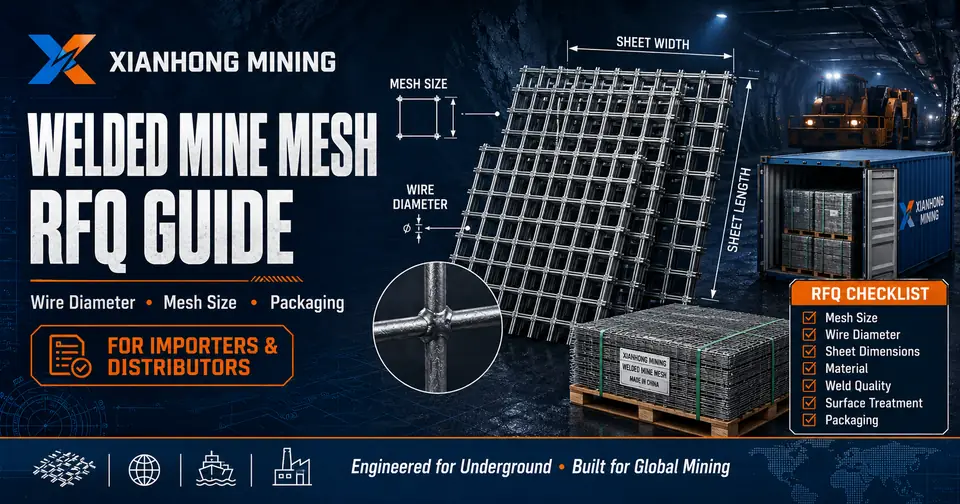
- Whether sheet or bundle dimensions can be adjusted for loading optimization --- see our welded mine mesh specification guide for how sheet dimensions affect container capacity
- Whether loading photos are required
5. Export Documents
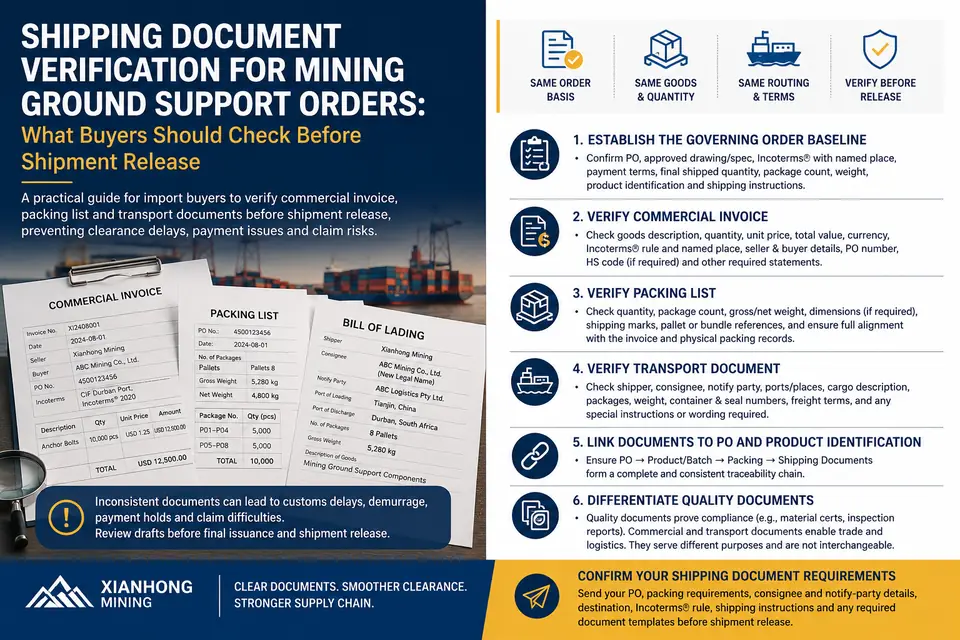
Export packing defines which documents must be prepared for the shipment. For a buyer-side consistency check across the commercial invoice, packing list, shipping instructions, and transport document, see our Shipping Document Verification Guide.
Export documents include the commercial invoice, packing list, certificate of conformity, certificate of origin, and any order-specific documents. These documents are required for customs clearance and for the buyer's import procedures.
Why it matters: Missing or incorrect documents can hold the shipment at the port, cause demurrage charges, or delay customs clearance. The document package should be agreed before shipment --- not assembled at the last minute.
Risk if missing: The manufacturer may prepare standard documents without knowing the buyer's specific requirements. Customs may reject the shipment for missing certificates or incorrect declarations.
What the buyer should confirm:
- Required document list for the destination country
- Whether a certificate of origin is required (and which format)
- Whether inspection or material certificates must accompany the shipment --- see our article on inspection and quality documents
- Who prepares each document --- manufacturer, freight forwarder, or buyer
Preparing the required document set is only the first step. Buyers should also verify that the commercial invoice, packing list, shipping instructions, and applicable transport-document data describe the same physical shipment without conflicting quantities, parties, package references, or routing information.
For a structured cross-document review, see our Shipping Document Verification Guide.
6. Destination Port and Customs Requirements
Destination requirements include import regulations, certification requirements, restricted item lists, labeling rules, and duty/tax categories. These requirements vary by country and may change without notice.
Why it matters: The manufacturer prepares export-related documents according to agreed order requirements. However, import customs clearance, local regulations, duties, and taxes remain the responsibility of the buyer or appointed importer. The manufacturer cannot determine all destination-country import obligations unless those requirements are provided and agreed before shipment.
Risk if missing: The buyer may assume the manufacturer handles all customs matters. The shipment arrives at the destination port but cannot be cleared because required certifications or labels were not arranged before shipment.
What the buyer should confirm:
- Import regulations for the product category in the destination country
- Whether any certifications or registrations are required before import
- Whether any labeling or marking rules apply
- Whether any items are restricted or require special permits
7. Special Handling Requirements
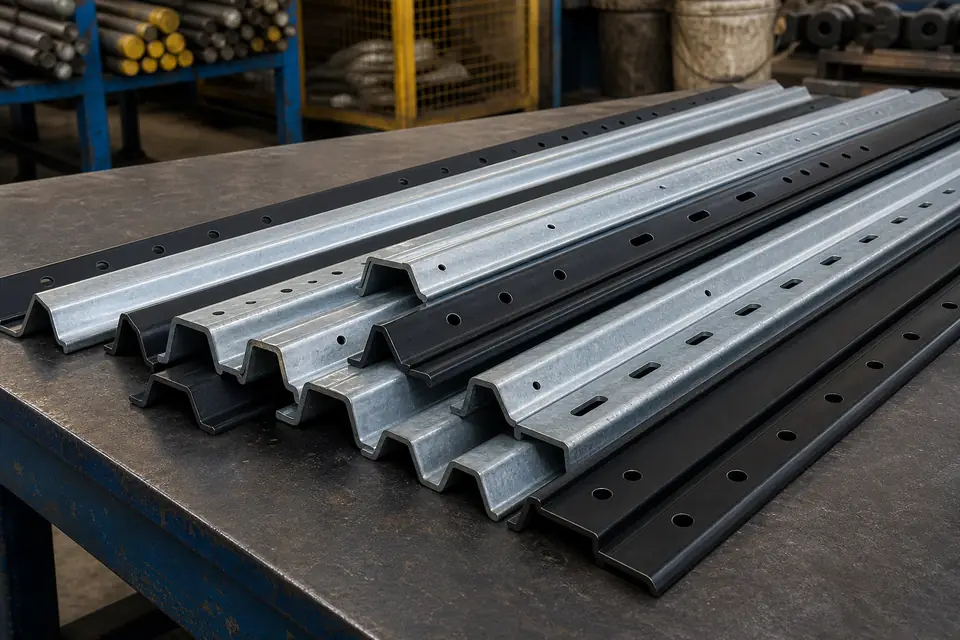
Special handling covers products that are oversized, over-length, over-weight, or irregularly shaped. Mining ground support products such as long rock bolts, U-steel arches, and cable anchors may not fit standard bundling or container arrangements.
Why it matters: Over-length products may require flat rack containers instead of standard containers. Over-weight bundles may exceed the container floor loading limit. Irregular shapes may require custom frames or dunnage to prevent shifting. These requirements must be identified before the loading plan is finalized.
Risk if missing: Unidentified special handling requirements may result in unsuitable container selection, additional packing work, or shipment delays.
What the buyer should confirm:
- Whether any products are over-length, over-weight, or irregularly shaped
- Whether flat rack or open-top containers are required
- Whether custom frames or dunnage are needed
- Whether any products require orientation-specific loading
Responsibility Division
Export packing and shipment involve multiple parties. Clear responsibility division prevents gaps and delays.
Item Responsible Party
Product packing according to agreed Manufacturer requirements
Export documentation preparation Manufacturer / Freight Forwarder
Import clearance Buyer / Importer
Local regulations and compliance Buyer / Customs Agent
Destination taxes and duties Buyer
Transport and port operations Freight Forwarder
Xianhong prepares export-related documents according to agreed order requirements. Import customs clearance, local regulations, duties, and taxes remain the responsibility of the buyer or appointed importer. Destination-country import, certification, and customs requirements must be confirmed by the buyer, importer, or appointed freight forwarder before production and shipment.
How Xianhong Handles Export Packing
Xianhong handles export packing through four steps:
1. Order Requirement Review
The manufacturer confirms the packing method, labeling requirements, document list, and destination port requirements based on the agreed order.
2. Product Protection
The manufacturer applies the agreed anti-corrosion method and prepares bundles or pallets according to the confirmed sizes and weights. The manufacturer documents the agreed protection method and packing requirements so that shipment preparation can be reviewed and repeated consistently for future orders.
3. Container Planning
The manufacturer plans the container type and loading arrangement based on product dimensions, weight limits, and destination requirements. The manufacturer evaluates loading arrangements based on actual product dimensions, packing method, and weight limitations to reduce loading and transportation risks. Loading photos are retained if required.
4. Shipment Documentation
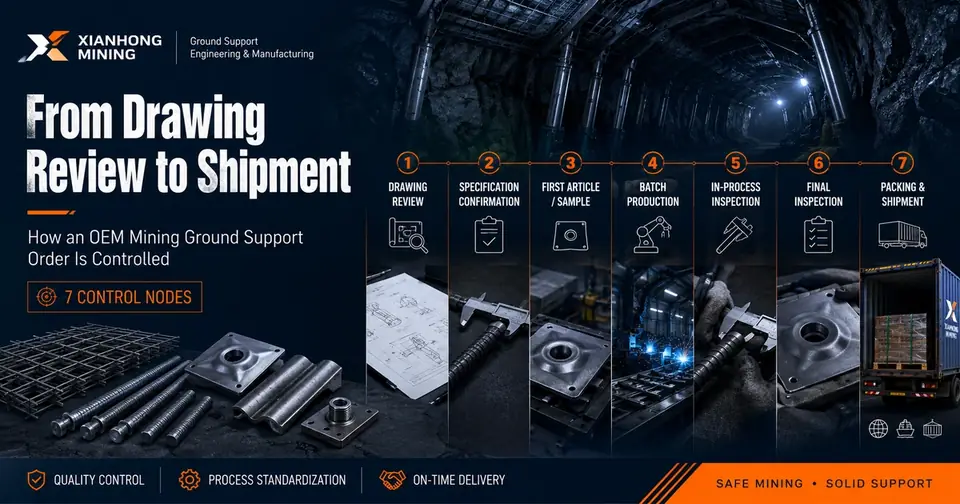
The manufacturer prepares the export document package --- packing list, commercial invoice, certificate of conformity, and any agreed documents --- and submits them to the freight forwarder. See our OEM order control process for how shipment release connects to the production workflow.
Summary
Production completion does not always mean shipment readiness. Export packing requires confirmation of anti-corrosion methods, bundling, labeling, container planning, export documents, destination requirements, and special handling. When these fields are confirmed, the manufacturer can prepare the shipment without delays. When they are missing, the shipment may be held at the port or arrive with damage.
Share your product list, destination port, and packing requirements. Xianhong will evaluate a suitable export packing and loading proposal.
Download the Mining Ground Support Export Packing Proposal Template (PDF)
Frequently Asked Questions About Export Packing for Mining Products
1. What information should buyers provide before shipment preparation?
Buyers should confirm:
- Product list and quantities
- Packing requirements
- Label and marking requirements
- Container type
- Destination requirements
- Required export documents
Early confirmation helps manufacturers prepare the shipment without avoidable delays.
2. Does Xianhong handle import customs clearance?
No. Xianhong prepares export-related documents according to agreed order requirements. Import customs clearance, local regulations, duties, and taxes remain the responsibility of the buyer, importer, or appointed customs agent.
3. Can packing methods be customized for distributors?
Yes. Packing methods can be evaluated according to product type, destination handling conditions, container planning, and buyer requirements.
4. What factors affect container loading efficiency?
Container utilization depends on:
- Product dimensions
- Packing method
- Bundle size and weight
- Container type
- Destination requirements
A suitable loading proposal should be confirmed before shipment preparation.
5. What export documents are commonly prepared for mining ground support products?
Depending on order requirements, documents may include:
- Commercial invoice
- Packing list
- Certificate of origin
- Certificate of conformity
- Material or inspection documents
Related: Supplier Capability | Welded Mine Mesh Specification Guide | OEM Mining Ground Support Procurement