
Disclaimer: This article provides general procurement guidance for welded mine mesh. Final product selection, support design, installation requirements, and acceptance criteria should be confirmed by the buyer and qualified project engineers. Production specifications are subject to material, tooling, geometry, welding process, and approved drawing.
A hypothetical distributor asks: "I need welded mesh for mining, five containers, please quote." The quantity alone does not establish the manufacturing and quotation basis.
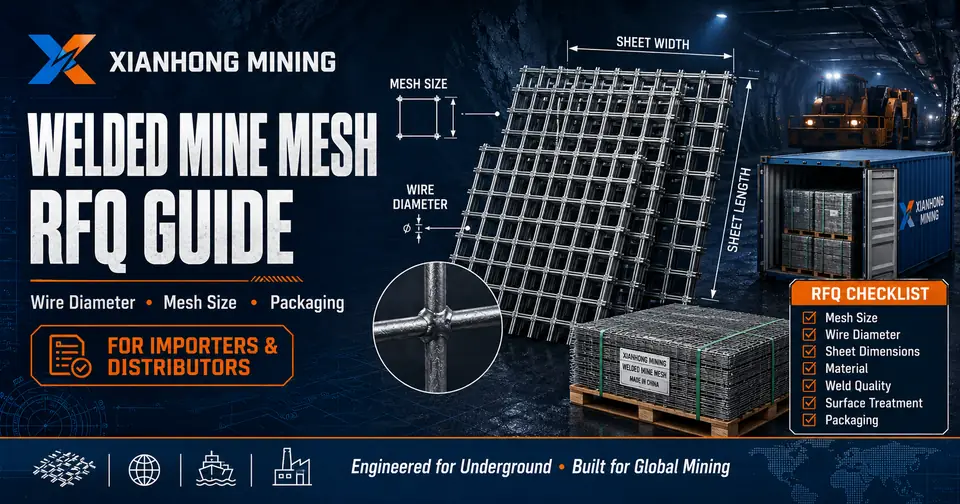
A mesh quotation depends on the buyer-defined mesh opening or spacing convention, wire diameter, panel dimensions, material, weld, finish and packing requirements. Without these fields, the manufacturer cannot establish a controlled quotation basis or complete a manufacturability review against the buyer's approved inputs. This guide lists the seven fields that a buyer or distributor should confirm before requesting a welded mine mesh quotation.
What Is Welded Mine Mesh?
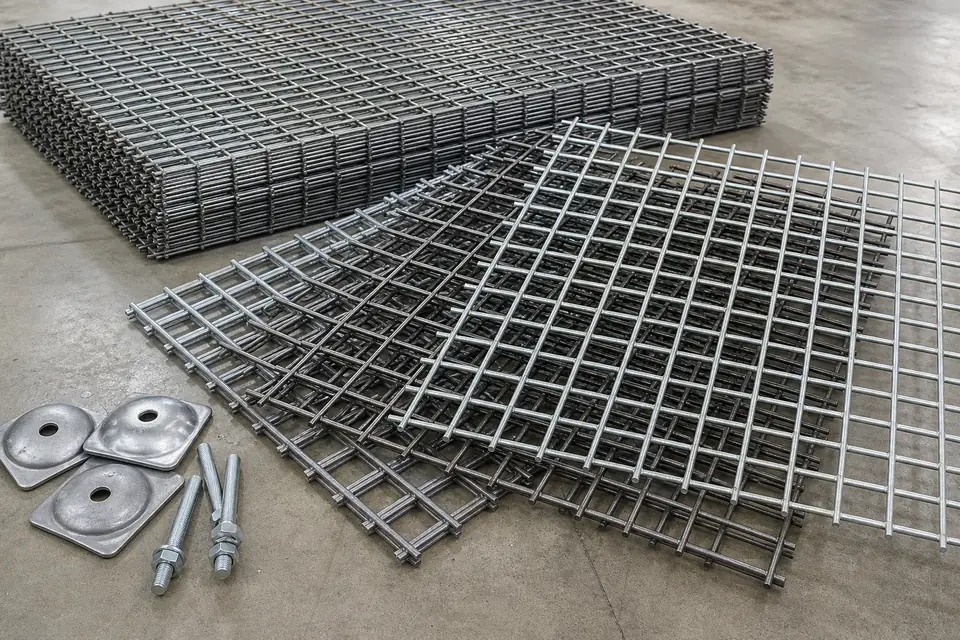
Welded mine mesh is a steel mesh product manufactured against buyer-approved panel dimensions, wire requirements, weld requirements and finish instructions. It may form part of an underground ground support system when selected and specified by the buyer and qualified project engineer.
This article does not cover support design, load calculation, or site suitability. It focuses on what a buyer or distributor needs to specify for procurement of the mesh.
Welded Mine Mesh RFQ Specification Checklist
| # | Field | Why It Matters | Risk If Missing | Buyer Should Confirm |
|---|---|---|---|---|
| 1 | Mesh opening / spacing convention | Prevents ambiguity between clear opening and wire pitch when the approved requirement is converted into manufacturing inputs. | The quotation may use the wrong dimensional convention. | State the required clear aperture/opening or wire pitch/centre-to-centre spacing exactly as defined in the buyer-approved drawing or specification. |
| 2 | Wire Diameter | Affects material input, panel mass, handling and quotation | Wrong mass or quotation basis | Nominal wire diameter and tolerance per approved drawing |
| 3 | Panel Dimensions | Establishes the bundle and container-planning inputs | Loading assumptions remain unresolved | Panel length and width per approved drawing |
| 4 | Material Requirement | Establishes the ordered material and inspection basis | Material basis remains unresolved | Grade, standard, edition and certificate requirement |
| 5 | Weld Requirement | Establishes process-control and acceptance inputs | Inspection basis remains unresolved | Test method, sampling and acceptance criteria |
| 6 | Surface Treatment / Finish | Establishes finish, coating and inspection inputs | Finish basis remains unresolved | Finish type, coating requirement and acceptance criteria |
| 7 | Packaging and Container Loading | Establishes order-controlled logistics inputs | Packing and loading assumptions remain unresolved | Confirm bundle, identification, handling and packing requirements against the approved order requirements. |
1. Mesh Opening / Spacing Convention
For this RFQ checklist, clear aperture or clear opening records the
clear distance between adjacent wires, while wire pitch or
centre-to-centre spacing records the distance between the centrelines
of adjacent wires. These labels are not interchangeable and do not
override the buyer's technical document. The RFQ should reproduce the
value and measurement convention used in the buyer-approved drawing or
specification; any ambiguity should remain an open item for buyer
confirmation.
Why it matters: The buyer-defined mesh opening or spacing value and measurement convention determine the wire layout and affect material input, welding operations, product weight, and quotation.
Risk if missing: The manufacturer cannot identify whether the stated dimension is a clear opening or a centreline spacing. The quotation may therefore use a dimensional convention that does not match the buyer-approved drawing or specification.
What the buyer should confirm:
- Required values in both directions as stated in the buyer-approved drawing or specification
- Whether the approved document defines clear aperture/opening or wire pitch/centre-to-centre spacing
- Whether the stated mesh opening or spacing is fixed or allows buyer-approved options
2. Wire Diameter
Wire diameter is the nominal diameter stated in the buyer-approved drawing or specification. The RFQ should record that value together with any applicable tolerance.
Why it matters: Wire diameter affects material cross-section, panel mass, handling and the quotation basis. Product requirements also depend on the specified material, geometry, weld criteria and acceptance requirements.
Risk if missing: The manufacturer cannot establish the material and mass basis for quotation. An assumed diameter may not match the buyer-approved requirement.
What the buyer should confirm:
- Nominal wire diameter as per the approved drawing
- Whether the diameter is fixed or allows options
- Whether wire diameter tolerance is specified
3. Panel Dimensions
Panel dimensions are the buyer-approved length and width of each welded mesh panel. They are required inputs for bundle and container planning.
Why it matters: Different panel dimensions can change bundle arrangement, panel mass and the container plan. The actual result must be calculated against the approved quantity, bundle limits, container payload and destination constraints.
Risk if missing: Bundle and loading assumptions remain unresolved, so the quotation does not have a controlled logistics basis.
What the buyer should confirm:
- Panel length and width as stated in the approved drawing
- Applicable dimensional tolerances
- Whether the approved document permits any dimensional variation
4. Material Grade
The material requirement identifies the ordered steel grade and any applicable standard and edition. It should follow the buyer-approved drawing, project specification or order. Any proposed alternative requires buyer approval.
Why it matters: The material requirement establishes the purchasing, manufacturability-review and inspection basis for the order.
Risk if missing: The quotation may rely on an unapproved material assumption and cannot be checked against a defined acceptance basis.
What the buyer should confirm:
- Material grade as specified in the approved drawing or order
- Whether a material certificate is required
- Whether the grade reference includes the standard and edition
- Whether alternative grades are acceptable
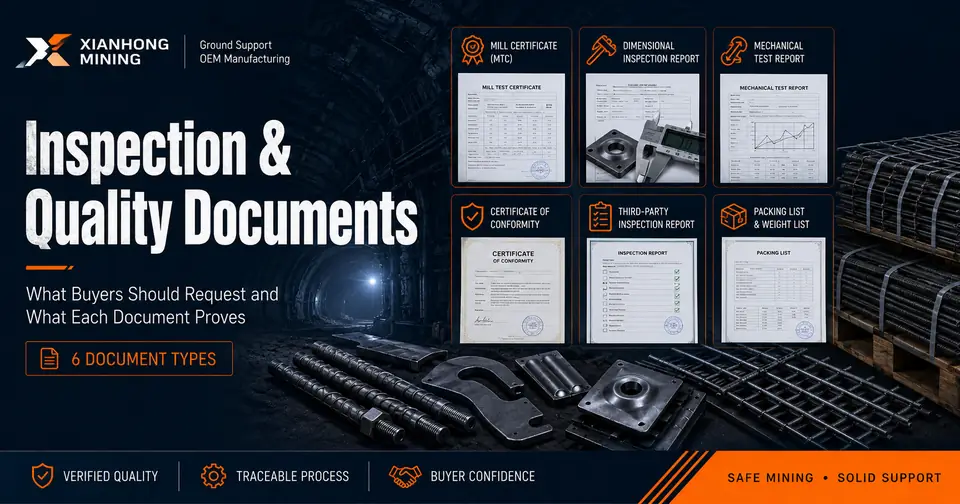
The RFQ should identify the required certificate type and scope. Confirm the required chemical, mechanical or other reported data through the applicable certificate and inspection or test records agreed for the order --- see our article on inspection and quality documents.
5. Weld Requirements
The weld requirement states the test method, sampling scope and acceptance criteria required by the buyer-approved specification or order.
Why it matters: Defined weld requirements give the manufacturer and buyer a common basis for process control, inspection and acceptance. They should come from the agreed specification rather than an unconfirmed general assumption.
Risk if missing: Production and inspection cannot be aligned to a buyer-approved weld acceptance basis.
What the buyer should confirm:
- Whether weld strength testing is required
- Test method and acceptance criteria
- Whether testing applies to every sheet or to a sample
- Whether weld appearance (burn-through, missing weld) is part of acceptance
6. Surface Treatment
Surface treatment or finish is the order-controlled surface condition required for the welded mesh. Current Xianhong reference configurations include bright, galvanized and heavy galvanized finishes, subject to the buyer-approved order and manufacturability review.
Why it matters: A defined finish and, where applicable, coating requirement establishes the production and inspection basis. Any effect on finished dimensions, mass or container planning should be checked against the specific order inputs.
Risk if missing: The quotation and inspection plan may use a finish assumption that does not match the buyer-approved order.
What the buyer should confirm:
- Surface treatment type as specified in the order
- Coating mass, thickness or other acceptance requirement, if specified
- Whether finished dimensions or mass require verification
7. Packaging and Container Loading
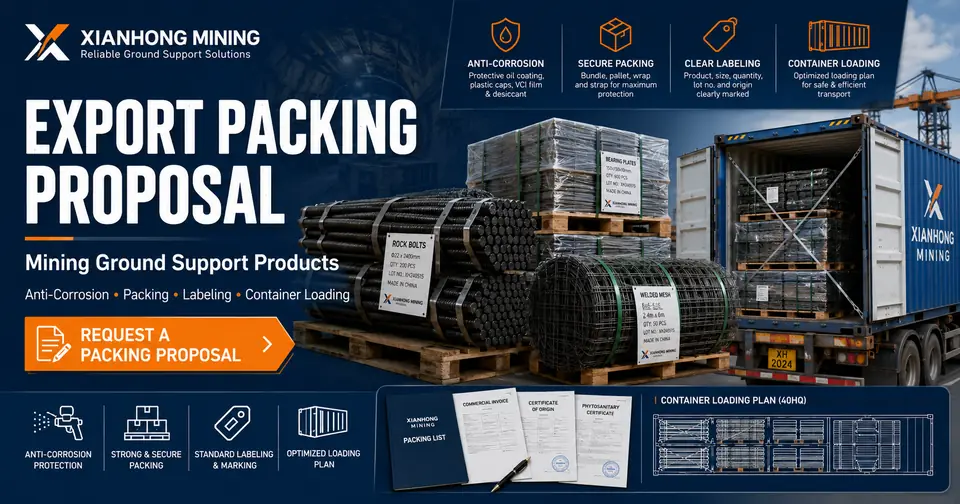
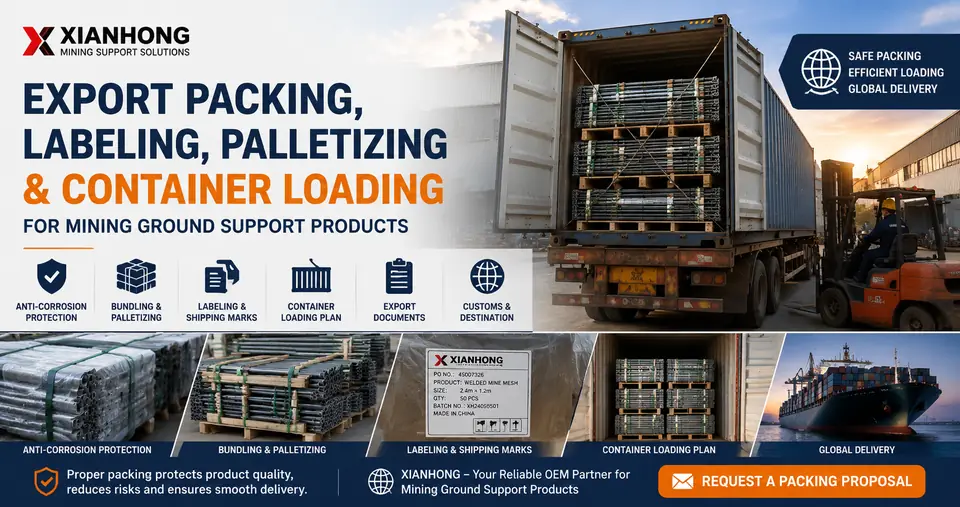
Packaging and container-loading inputs may include bundle limits, identification, handling instructions, packing method, container type and destination constraints supplied by the responsible buyer or importer.
Why it matters: These inputs allow the manufacturer to review the packing and loading basis against the approved order. The final plan depends on panel mass, quantity, bundle limits, payload and destination requirements.
Risk if missing: Packing and loading assumptions remain open and may not match the buyer's handling or destination requirements.
What the buyer should confirm:
- Maximum bundle weight for handling at destination
- Whether pallets, frames, or steel straps are required
- Container type (20GP, 40GP, 40HQ) and any destination restrictions
- Whether the approved document permits any panel-dimension variation
- Buyer/importer instructions for packing, marking and destination handling
How Xianhong Defines Welded Mine Mesh Specifications
Xianhong evaluates welded mesh specifications through:
1. Drawing and Specification Review
The manufacturer reviews the approved drawing to confirm the mesh opening or spacing convention, wire diameter, panel dimensions and material requirement. Missing information is compiled into an open item list.
2. Manufacturing Capability
The manufacturer reviews the requested geometry, material, weld, finish and quantity against the available manufacturing scope. Unresolved inputs or manufacturability constraints remain open for buyer confirmation.
3. Quality Verification
The manufacturer confirms the buyer-defined weld testing requirements and acceptance criteria for the offered scope. Required inspection records and material certificates should be identified against the agreed order and traceability fields --- see our article on inspection and quality documents.
4. Packaging and Export Preparation
The manufacturer reviews bundle, packing and container inputs against the buyer's logistics requirements. Agreed export packing and documentation are prepared according to the approved order.
Production capability is subject to material, tooling, geometry, welding process, and approved drawing. When a conflict exists between this article's general information and the approved drawing, the approved drawing governs.
Summary
A complete RFQ provides a controlled basis for manufacturability review and quotation. When the seven fields above are defined, the manufacturer can review material input, production scope, inspection and packing against buyer-approved requirements and return unresolved items for confirmation.
For a coordinated RFQ covering mesh together with W-straps and bearing plates, use the Mining Surface Support Procurement Guide to align buyer-approved component requirements, interface references, inspection evidence, identification and packing inputs.
Download Welded_Mine_Mesh_RFQ_Specification_Sheet_Xianhong_V2 (PDF)
A practical checklist covering mesh opening or spacing, wire diameter, panel dimensions, quality requirements, and packaging information before requesting an OEM quotation.
Frequently Asked Questions About Welded Mine Mesh Procurement
1. What information should I provide when requesting a welded mine mesh quotation?
Buyers should provide:
- Mesh opening / spacing convention
- Wire diameter
- Panel dimensions
- Material requirement
- Weld quality requirements
- Surface treatment
- Packaging and container requirements
An approved drawing or specification sheet is recommended whenever available.
2. How do mesh opening or spacing and wire diameter affect quotation?
The buyer-defined mesh opening or spacing value, its measurement convention, and wire diameter affect steel consumption, product weight, welding operations, and production cost. These inputs should be confirmed in the buyer-approved drawing or specification before quotation.
3. Can welded mine mesh be customized for container loading?
Xianhong can review buyer-proposed panel dimensions, bundle limits, packing methods and container inputs for manufacturability. Any accepted variation remains subject to buyer approval and the final order.
4. What quality documents can buyers request for welded mine mesh?
Depending on project requirements, buyers may request:
- Material certificates
- Dimensional inspection records
- Weld inspection records
- Packing documents
- Certificate of conformity
5. Does Xianhong supply other mining ground support components?
Current Xianhong product pages include rock bolts, bearing plates, W-straps, welded mesh and related ground-support components. Each RFQ remains subject to the relevant buyer-approved requirements and manufacturability review.
Related: Mining Bearing Plate RFQ Guide | Inspection and Quality Documents for Mining Ground Support Products | Mine Mesh Product Page