
Disclaimer: This article explains component interface specifications for procurement communication. It does not provide mining support system design recommendations or determine how components should be combined in a specific application. Final compatibility should be confirmed based on approved drawings, specifications, samples, and project requirements.
A buyer orders rock bolts, bearing plates, W-straps, nuts, and welded mesh from one supplier. The buyer asks: “These items are compatible, right?” The supplier replies: “Before confirming compatibility, we need to check the interface specifications — thread, diameter, hole spacing, and profile.”
Buying multiple components from one supplier does not automatically mean the components are compatible. Each component has interface dimensions that must match the corresponding part. This guide lists the six interface fields that a buyer should confirm when purchasing multiple ground support components together.
What Are Component Interfaces?
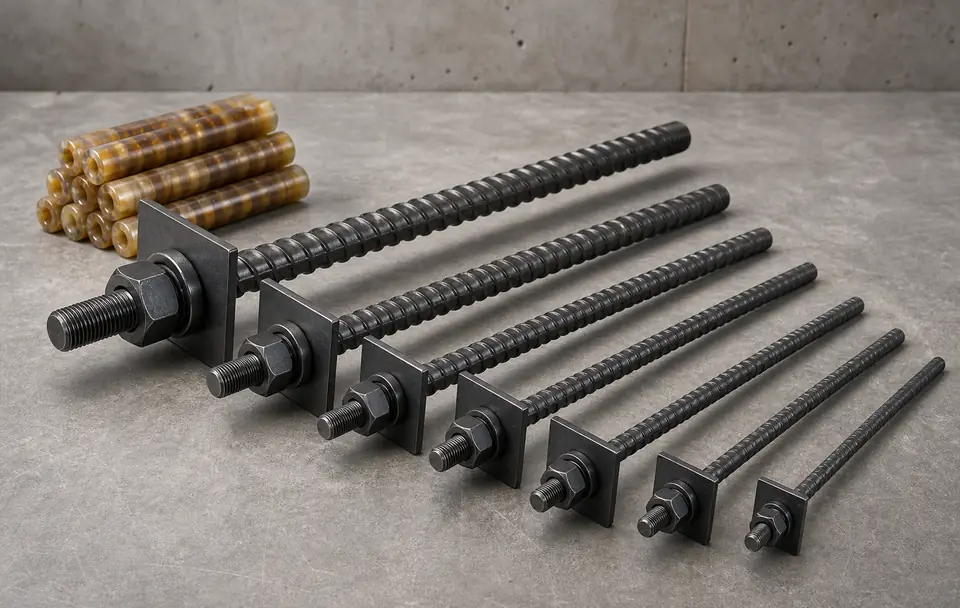
Component interfaces refer to the dimensional and specification relationships that allow different parts to connect, assemble, or work together according to approved requirements. For example, a rock bolt interfaces with a bearing plate through the plate hole, with a nut through the thread, and with a W-strap through the strap hole spacing.
This article does not cover support system design, product selection, or how components should be combined in a specific application. It focuses on what a buyer needs to confirm so that the components ordered from the manufacturer are dimensionally compatible.
Component Interface Checklist
| # | Interface | What It Connects | Risk If Missing | Buyer Should Confirm |
|---|---|---|---|---|
| 1 | Thread Specification | Bolt ↔ Nut | Bars cannot be tightened, unusable | Thread type, direction, pitch, and length |
| 2 | Bolt Diameter vs. Plate Hole | Bolt ↔ Plate | Bolt cannot pass through or plate seats loosely | Diameter relationship per approved drawing |
| 3 | Plate Profile vs. Nut Seating | Plate ↔ Nut | Nut does not seat properly, uneven load | Dome height and nut contact surface |
| 4 | W-Strap Hole Spacing vs. Bolt Layout | Strap ↔ Bolt | Strap cannot be installed at required positions | Hole spacing and bolt layout per drawing |
| 5 | Washer Dimensions vs. Plate Hole and Bolt | Washer ↔ Plate ↔ Bolt | Washer does not fit or seat correctly | Washer OD, ID, and thickness |
| 6 | Mesh Panel Dimensions vs. Support Pattern | Mesh ↔ Support Layout | Mesh does not cover required area | Panel dimensions per project requirements |
1. Thread Specification: Bolt vs. Nut
The thread is the most direct mechanical interface between the bolt bar and the nut. Thread type, direction, pitch, and threaded length must all match. A right-hand thread bolt cannot be used with a left-hand thread nut — the nut will not engage.
Why it matters: Thread mismatch is the most expensive interface error. If the thread does not match, the bolt cannot be tightened, and the entire support assembly cannot function. The error typically cannot be repaired on site — the bars must be returned or reworked.
Risk if missing: The manufacturer may produce bolts and nuts to different thread specifications if the interface is not confirmed. The buyer discovers the mismatch during installation, when correction is no longer possible without replacing components.
What the buyer should confirm:
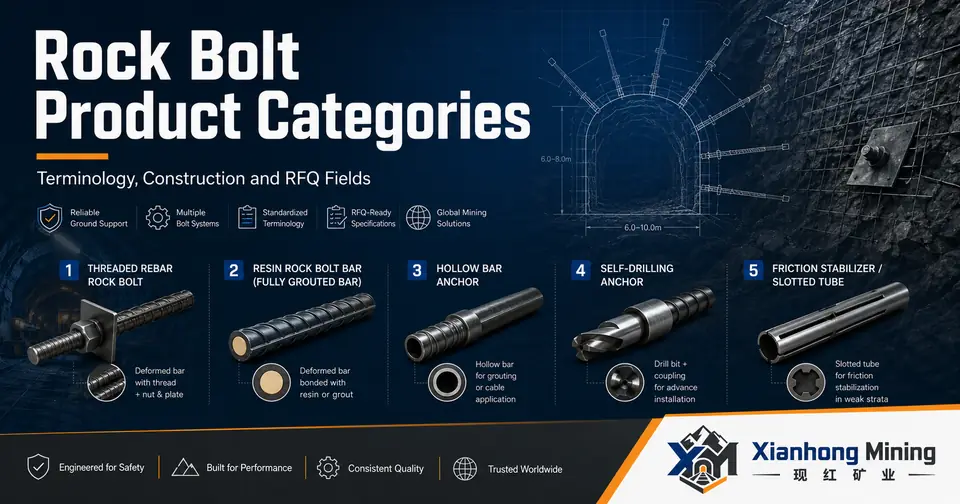
- Thread type (continuous, segmental, or other) — see our resin rock bolt bar specifications
- Thread direction (left-hand or right-hand) for both bolt and nut
- Pitch and standard reference for both
- Threaded length on the bolt vs. nut engagement depth
2. Bolt Diameter vs. Bearing Plate Hole
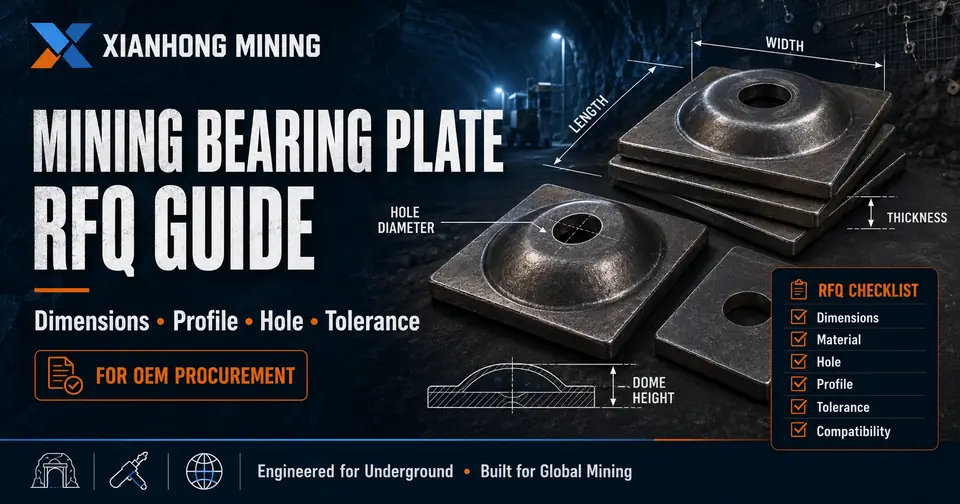
This interface determines whether the bolt can pass through the plate hole and whether the plate seats correctly under load. The relationship between bolt diameter, plate hole size, and associated washer dimensions must be confirmed according to the approved drawing.
Why it matters: If the hole is too small, the bolt will not pass through. If the hole is too large, the plate may not seat properly or may shift under load. The washer may bridge the gap or fall through, depending on its dimensions relative to the hole. For example, a 20 mm bolt ordered for a plate with a 22 mm hole may allow the plate to shift under load, while a 22 mm bolt ordered for a plate with a 20 mm hole cannot be installed at all. Returning to the buyer who asked “are these compatible?”: the bolt diameter and plate hole must be checked first — if the bolt cannot pass through the plate, the assembly cannot even begin.
Risk if missing: The manufacturer may produce plates with a default hole size that does not match the bolt diameter specified elsewhere in the project. The buyer discovers the incompatibility during installation.
What the buyer should confirm:
- Bolt shank diameter that will pass through the plate hole
- Plate hole diameter as per the approved drawing — see our bearing plate RFQ guide
- Whether a counterbore or chamfer is required for washer seating
- The relationship between bolt diameter, plate hole, and washer dimensions
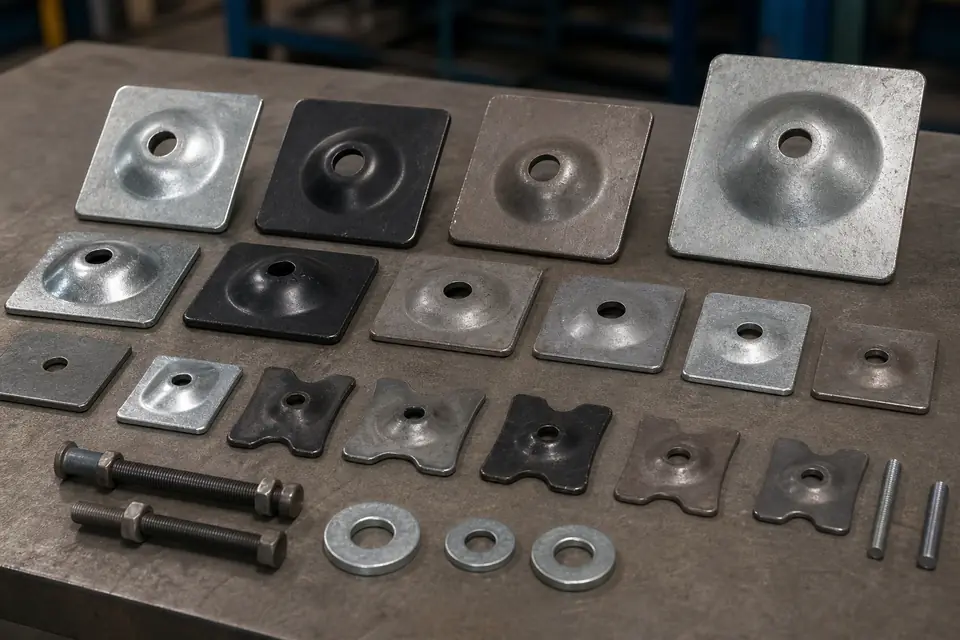
3. Bearing Plate Profile vs. Nut Seating
This interface determines whether the nut seats properly on the plate. A domed plate requires the nut to contact the dome surface correctly. A flat plate requires the nut to seat on the flat surface. The washer type (flat, spherical, or other) affects how the nut interfaces with the plate profile.
Why it matters: If the plate profile and nut seating are not matched, the nut may not tighten properly, may sit at an angle, or may cause the plate to deform under load. For example, a spherical washer placed on a flat plate without a counterbore may sit at an angle, causing the nut to tighten unevenly and the plate to bear load on one side only. An improperly seated nut can loosen over time or create point loading instead of distributed loading.
Risk if missing: The manufacturer may produce plates with a dome profile that does not match the nut or washer type used on site. The buyer discovers the seating issue during installation, when the nut cannot be fully tightened.
What the buyer should confirm:
- Whether the plate is flat or domed
- If domed: dome height and nut contact surface
- Washer type (flat, spherical, or other) and whether a counterbore is needed
- Whether the nut seats properly on the approved profile
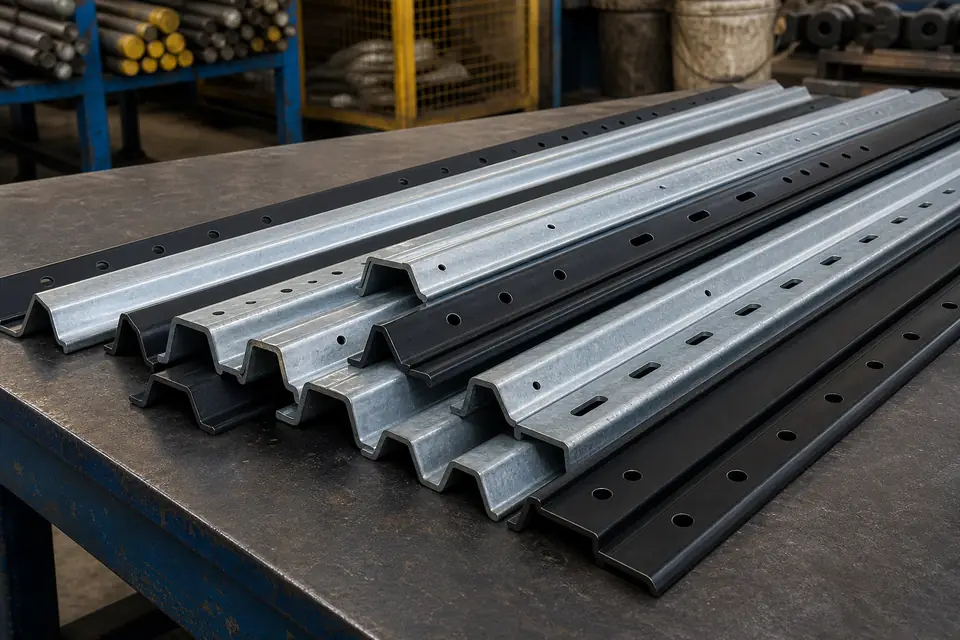
4. W-Strap Hole Spacing vs. Bolt Layout
This interface determines whether the strap can be installed at the required bolt positions. The hole spacing on the strap must match the bolt layout in the roadway. If the spacing does not match, the strap cannot be installed without modification.
Why it matters: Even a small deviation in hole spacing can prevent bolt insertion or cause misalignment across multiple straps. The strap holes must align with the bolt positions as specified in the approved drawing. This interface confirms whether the strap openings match the specified bolt layout requirements.
Risk if missing: The manufacturer may produce straps with a default hole spacing that does not match the project bolt layout. The buyer discovers the mismatch on site, when the strap holes do not align with the installed bolts.
What the buyer should confirm:
- W-strap hole spacing as per the approved drawing — see our W-strap specification guide
- Bolt layout spacing in the project
- Whether spacing is uniform or variable
- Whether hole diameter matches the bolt diameter plus clearance
5. Washer Dimensions vs. Plate Hole and Bolt
This interface confirms that the washer fits correctly between the bolt and the plate. The washer outer diameter (OD) must be large enough to bridge the plate hole. The washer inner diameter (ID) must be large enough for the bolt to pass through. The washer thickness affects how the nut seats.
Why it matters: If the washer OD is too small, it may fall through the plate hole. If the washer ID is too small, the bolt will not pass through. If a spherical washer is used but the plate has no counterbore, the washer may not seat properly. These three components — bolt, washer, and plate — form a chain that must be confirmed together.
Risk if missing: The manufacturer may supply washers with default dimensions that do not match the plate hole or bolt diameter. The buyer discovers the incompatibility during assembly.
What the buyer should confirm:
- Washer OD relative to plate hole diameter
- Washer ID relative to bolt shank diameter
- Washer type (flat, spherical, or other) and plate counterbore requirement
- Whether the washer is supplied by the manufacturer or sourced separately
6. Mesh Panel Dimensions vs. Support Pattern
This interface confirms whether the mesh panels cover the required support area. Mesh panel dimensions should be confirmed according to the buyer's specified project requirements and approved drawings. Unlike the other interfaces, mesh does not connect mechanically to bolts or plates — it is positioned and secured as part of the support layout.
Why it matters: If the mesh panels are too small, gaps may appear between panels or between the mesh and the support boundary. If the panels are too large, they may need to be cut on site, which affects installation time and edge quality. Panel dimensions should be confirmed according to the buyer's specified project requirements and approved drawings.
Risk if missing: The manufacturer may produce mesh panels with standard dimensions that do not match the project support pattern. The buyer discovers the mismatch during installation, when panels do not cover the required area or require modification on site.
What the buyer should confirm:
- Mesh panel length and width as per project requirements — see our welded mine mesh specification guide
- Whether panel dimensions are fixed or can be adjusted
- Whether overlap between panels is required and how much
- Whether mesh is supplied in sheets or rolls
How Xianhong Confirms Component Compatibility
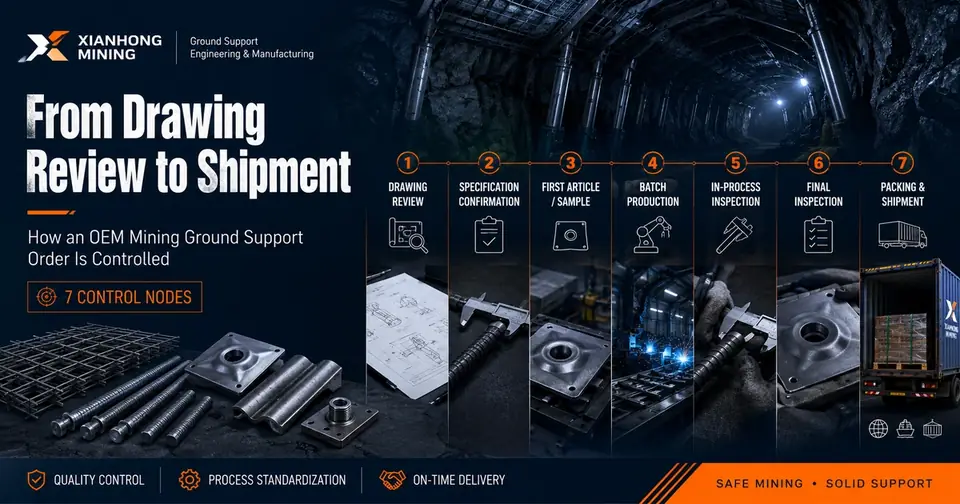
Xianhong confirms component compatibility through four steps:
1. Specification Review
The manufacturer reviews all approved drawings and specifications to confirm component dimensions, thread details, hole positions, and interface requirements.
2. Drawing Comparison
The manufacturer cross-checks interface dimensions across components — bolt diameter vs. plate hole, thread vs. nut, strap hole spacing vs. bolt layout — to identify mismatches before production.
3. Sample or Approval Confirmation
Where practical, the manufacturer produces or references an approved sample to confirm that components assemble correctly. Sample approval is documented before batch production.
4. Production Control
The manufacturer releases production orders with confirmed interface dimensions. Any change to one component's interface dimension triggers a review of all affected components. See our supplier capability page for manufacturing range and process details.
Component compatibility is subject to material, tooling, geometry, and approved drawing. When a conflict exists between this article's general information and the approved drawing, the approved drawing governs.
Summary
Buying multiple components from one supplier does not automatically mean the components are compatible. Each interface — thread, diameter, hole spacing, profile, washer, and panel dimensions — must be confirmed according to the approved drawing. When interfaces are checked before production, the buyer receives components that assemble correctly on site. When interfaces are not checked, the buyer discovers the mismatch during installation — when correction is costly or impossible.
A practical interface matrix helps buyers confirm thread, diameter, hole, profile, washer, and panel interfaces across all ground support components before placing a multi-component order.
Use the Mining Surface Support Procurement Guide when those buyer-approved interface requirements need to be carried into a coordinated RFQ for W-straps, welded mesh and bearing plates.
Related: Resin Rock Bolt Bar Specifications | Mining Bearing Plate RFQ Guide | W-Strap Specification Guide | Supplier Capability