
Disclaimer: This article explains common information gaps and quality communication risks in mining ground support procurement. It does not define universal acceptance standards. Product conformity should always be evaluated against agreed drawings, specifications, samples, contracts, and inspection requirements.
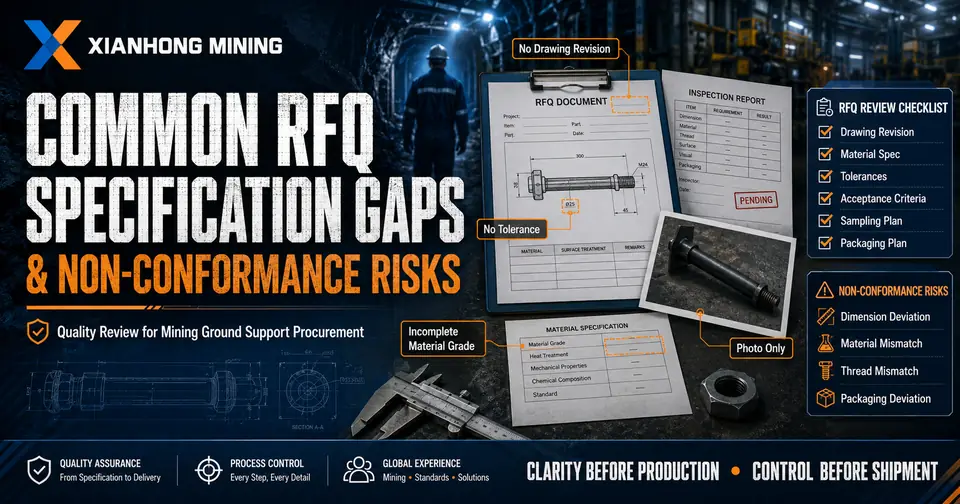
A manufacturer receives an RFQ for mining ground support products. The buyer has attached a drawing --- but there is no revision number. The material grade is listed as "Q235" with no standard reference. The tolerance field is blank. A product photo is included, but no dimensional drawing. The thread specification references an outdated standard.
The problem is not always the product. Sometimes the problem starts before production --- with incomplete information, unclear references, or undefined acceptance criteria.
This article identifies the most common specification gaps found in mining ground support RFQs, and the non-conformance risks that can result when information is missing or unclear. It also explains why an incomplete RFQ and a non-conforming product are two different issues.
Part 1: Common RFQ Specification Gaps
1. No Drawing Revision
Returning to the RFQ described above: the drawing has no revision number. Without a revision, the manufacturer cannot confirm whether the drawing is the current version. If the buyer later provides an updated revision, all previous quotations and production planning may be invalid. Drawing revision must be confirmed before any technical review begins.
2. Only Product Photos Provided
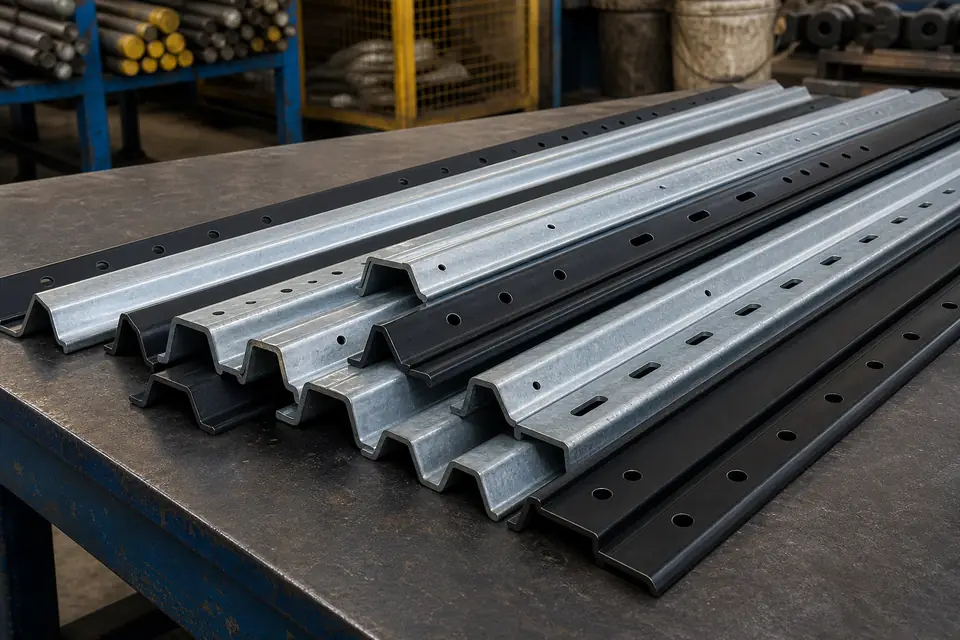
The buyer sends product photos instead of a technical drawing. A buyer sends a photo of a W-strap taken at a mine site. The photo shows the general shape, but the hole spacing, material grade, and thickness cannot be measured from the image. Photos cannot communicate tolerances, hole positions, thread dimensions, or material grade. A photo is a reference, not a production document. The manufacturer cannot quote or produce from photos alone.
3. Incomplete Material Grade
The RFQ states "Q235" or "Q345" without specifying the standard, edition, or whether a material certificate is required. A grade name alone does not confirm the actual chemical and mechanical data. The manufacturer needs the full grade reference and the certificate requirement to source material correctly.
4. No Length Tolerance
The drawing specifies a nominal length but no tolerance. A buyer specifies a nominal length but does not define the acceptable tolerance range. If the finished product differs from the nominal dimension, there is no agreed basis to determine whether the deviation is acceptable. Without a tolerance, there is no answer. The manufacturer does not know the acceptable deviation range, and the buyer has no basis for rejecting bars that deviate from the nominal length. Tolerance must be stated on the drawing or in the specification sheet.
5. Incomplete Thread Specification
The RFQ mentions "threaded bar" but does not specify thread type, direction, pitch, or threaded length. A buyer writes "M24 thread" but does not specify direction. The manufacturer produces the default thread direction, but the supplied nuts use the opposite direction. The components cannot be assembled. The thread specification must include type, direction, pitch, and length before production.
6. No Matching Nut Specified
The buyer orders rock bolts but does not specify the matching nut. If the nut is sourced separately, its thread must match the bar. If the nut is not confirmed, the bolt and nut may be incompatible. The buyer should clarify whether accessories are included and specify their dimensions.
7. No Acceptance Criteria
The RFQ does not state how the product will be accepted or rejected. Without acceptance criteria, the manufacturer does not know what inspection standard to apply. The buyer has no basis for rejecting products that do not meet expectations. Acceptance criteria should be agreed before production release.
8. No Sampling Requirements
The RFQ does not specify whether inspection is 100% or sampling-based, or what sample sizes apply. Without sampling requirements, the manufacturer may apply a default inspection plan that does not match the buyer's expectations. Sampling method and sample size should be defined in the inspection plan.
Part 2: Common Non-Conformance Risks
1. Dimension Deviation
Actual product dimensions deviate from the approved drawing. This risk is directly linked to Gap #4 (No Length Tolerance). When tolerances are not specified, the manufacturer may apply general tolerances that do not meet the project requirement. Dimension deviation is one of the most preventable quality risks when critical tolerances are clearly defined before production.
2. Material Mismatch
The material used in production differs from the material specified in the order. This risk is linked to Gap #3 (Incomplete Material Grade). When the grade is listed without a standard reference or certificate requirement, the manufacturer may source a similar grade without written buyer approval. A material mismatch can cause the product to fail agreed inspection requirements or create uncertainty about whether the supplied material matches the approved specification.
3. Thread Compatibility Issue
The thread on the finished product does not match the approved sample or the nut used on site. This risk is linked to Gap #5 (Incomplete Thread Specification). When thread direction, pitch, or length is not fully specified, the manufacturer may produce bars with a default thread that does not match the site hardware. A thread compatibility issue typically cannot be repaired on site --- the bars must be returned or reworked.
4. Missing Identification Records
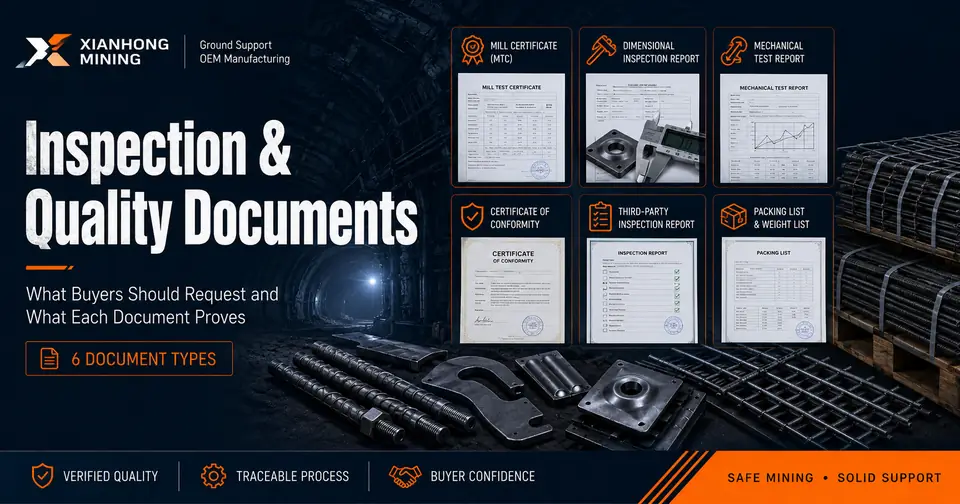
The product arrives without batch numbers, heat numbers, or production identification. Without identification, the product cannot be traced to its material certificate, production record, or inspection result. Missing identification makes it impossible to investigate field issues or verify quality claims --- see our article on inspection and quality documents.
5. Surface Treatment Issue
The surface treatment does not meet the order requirement. This may occur when the treatment type was not specified, when galvanizing thickness was not defined, or when the treatment was applied after threading without checking dimensional impact. Surface treatment issues may not be visible until the product is in use.
6. Packaging Deviation
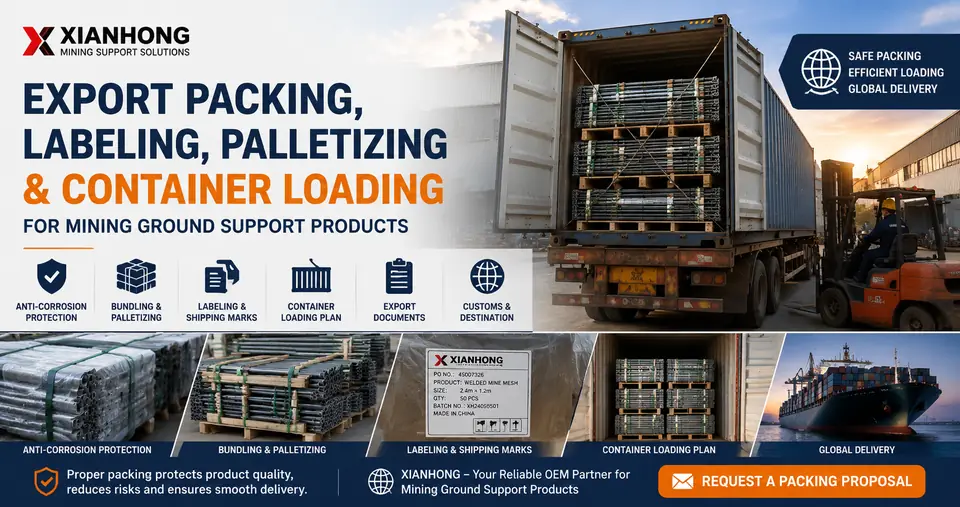
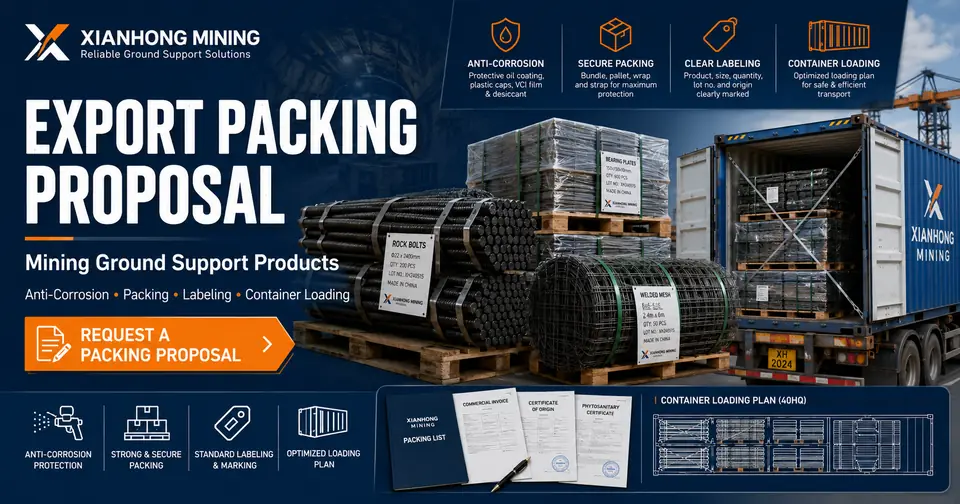
The actual packaging differs from the approved packing plan. This may occur when the packing method was not confirmed, when bundle weights were not specified, or when container loading was not planned with the buyer. Packaging deviation can cause handling damage, low container utilization, or customs clearance issues.
Specification Gap vs. Product Non-Conformance: Two Different Issues
An incomplete RFQ does not automatically mean a non-conforming product. These are two different issues.
A specification gap is a missing or unclear requirement in the RFQ. It happens before production. It can be fixed by confirming the missing information.
A product non-conformance is a deviation from an agreed requirement. It happens during or after production. It can only be identified when there is an agreed reference to compare against.
A product can only be judged non-conforming when there is an agreed reference, such as:
- Approved drawing
- Technical specification
- Approved sample
- Contract requirement
- Inspection criteria
Without these references, the word "non-conforming" has no defined meaning. This is why completing the RFQ before production is not just an administrative step --- it is the foundation of quality verification.
Preventing RFQ and Quality Issues Before Production
Most specification gaps and non-conformance risks can be prevented before production begins. Three actions help:
1. Complete RFQ Information
Confirm all specification fields before requesting a quotation. Use a checklist to ensure that drawing revision, tolerances, material grade, thread specification, accessories, acceptance criteria, and sampling requirements are all provided. See our W-Strap RFQ Specification Guide for an example of complete RFQ fields.
2. Confirm Production Reference
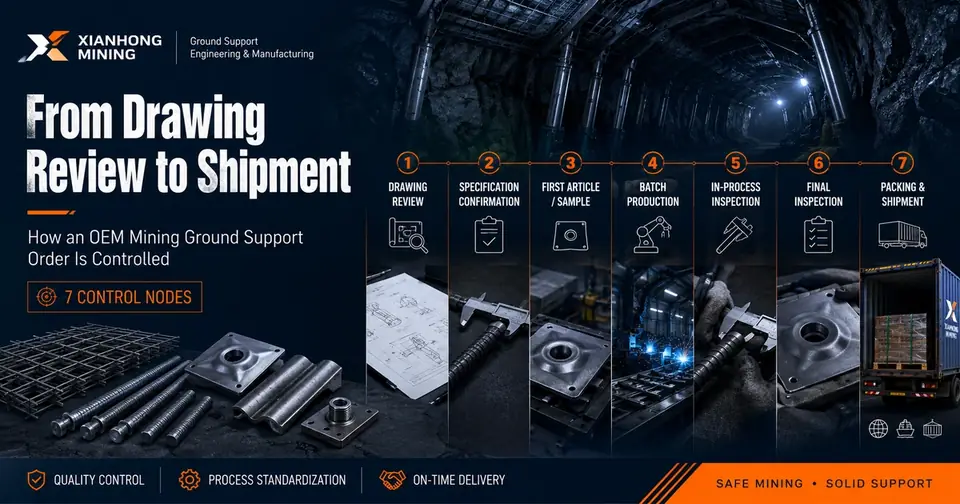
Ensure that the approved drawing, specification sheet, and sample are confirmed in writing before production release. No verbal agreement replaces a documented baseline.
3. Define Inspection and Documentation Requirements
Agree on inspection items, sample sizes, acceptance criteria, and required documents before production. See our article on inspection and quality documents for guidance on what to request and what each document proves.
Summary
Many procurement disputes are not caused by manufacturing capability issues. They often begin with incomplete information, unclear references, or undefined acceptance criteria. When the RFQ is complete, the production reference is confirmed, and the inspection requirements are defined, both buyer and manufacturer have a clear basis for quality verification --- and the word "non-conforming" finally has a defined meaning.
Download Common_RFQ_Specification_Gaps_and_Non_Conformance_Risks_Final_Revised_With_FAQ (PDF)
A practical checklist helping buyers confirm drawings, specifications, inspection requirements, and documentation before requesting an OEM quotation.
Frequently Asked Questions About RFQ Completeness and Quality Risks
1. Why can a manufacturer not quote accurately from product photos only?
Product photos can show general appearance, but they cannot define critical manufacturing information such as dimensions, tolerances, material requirements, thread details, or acceptance criteria. A technical drawing or specification sheet is required for accurate quotation.
2. Does an incomplete RFQ mean the final product will be non-conforming?
No. An incomplete RFQ and a non-conforming product are different issues. A product can only be judged non-conforming when it is compared against an agreed reference, such as an approved drawing, specification, sample, contract requirement, or inspection criteria.
3. What information should be confirmed before production starts?
Before production release, buyers should confirm:
- Approved drawing revision
- Material requirements
- Critical dimensions and tolerances
- Thread and accessory compatibility
- Inspection requirements
- Acceptance criteria
- Documentation requirements
4. What quality documents should mining buyers request?
Depending on project requirements, buyers may request:
- Material certificates
- Dimensional inspection reports
- Production records
- Identification and traceability records
- Inspection documents
- Packing records
5. How can buyers reduce RFQ-related quality risks?
Using an RFQ completeness checklist before quotation helps ensure that technical requirements, inspection expectations, and documentation needs are clearly communicated before production begins.
Related: Inspection and Quality Documents for Mining Ground Support Products | W-Strap Specification Guide for Mining Procurement | Quality & Factory