
PILLAR GUIDE · OEM Mining Ground Support Procurement
Continue into the focused buying questions.
This page is the topic map. Use the focused guides below for product, interface, documentation and order-stage detail.
- First Article Approval for OEM Mining Ground Support Components: What Buyers Should Confirm Before Batch ProductionA buyer-focused guide to first article and sample approval, inspection evidence, deviation control and documented production release before OEM mining ground support batch production.
- Shipping Document Verification for Mining Ground Support Orders: What Buyers Should Check Before Shipment ReleaseA practical buyer guide to checking commercial invoices, packing lists, shipping instructions and transport documents against one approved shipment baseline.
- How to Compare OEM Quotations for Mining Ground Support Components on a Like-for-Like BasisA practical guide to comparing OEM mining quotations by technical scope, tooling, inspection, packing, Incoterms, payment terms, deviations and normalized cost.
- Product Identification and Marking for OEM Mining Ground Support Components: What Buyers Should SpecifyA practical guide to defining part, bundle and pallet identification, marking methods, batch traceability, label approval and record linkage for OEM mining components.
- OEM Drawing Review for Mining Ground Support Components: What Buyers and Manufacturers Should Confirm Before ProductionA practical OEM drawing review guide covering revisions, dimensions, materials, interfaces, inspection requirements, open items, and controlled production release.
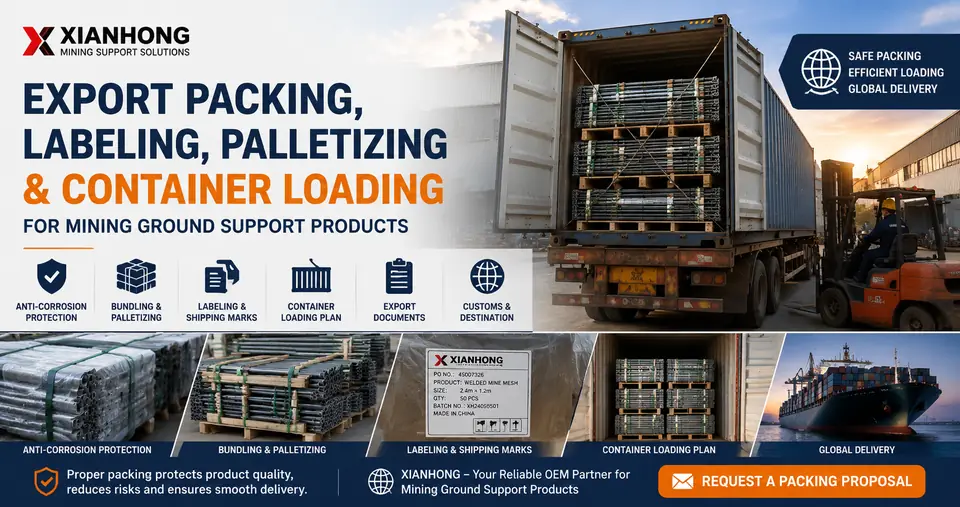
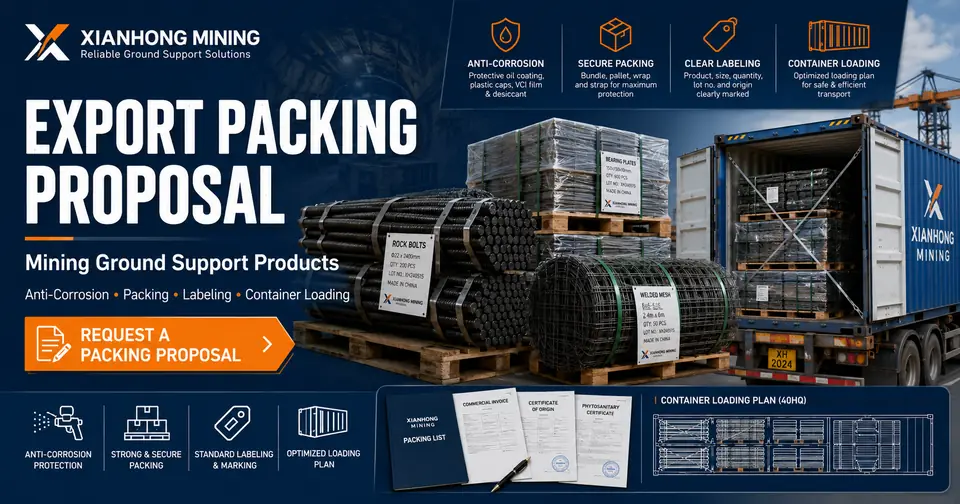
- Export Packing, Labeling, Palletizing and Container Loading for Mining Ground Support ProductsA practical guide explaining export packing requirements for mining ground support products, including corrosion protection, bundling, labeling, palletizing, container loading and shipment document preparation.
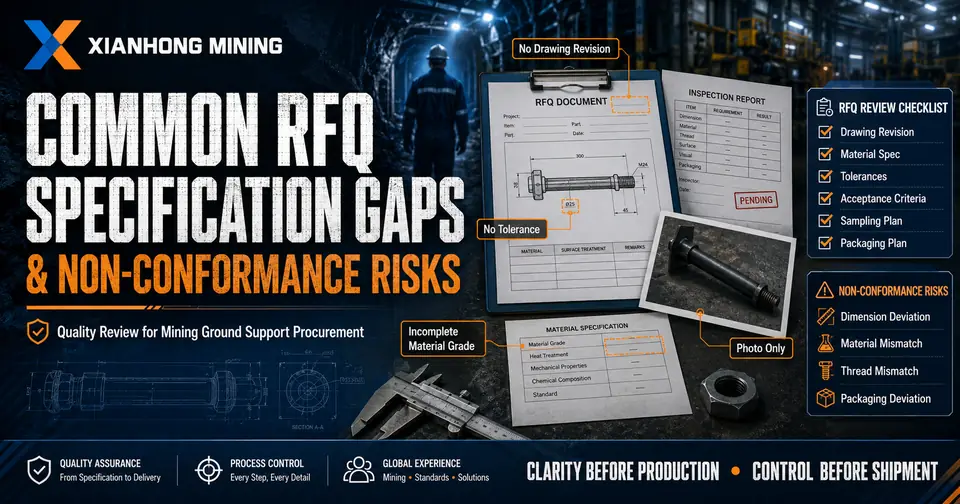
- Common RFQ Specification Gaps and Non-Conformance Risks in Mining Ground Support ProcurementA practical guide explaining common RFQ specification gaps in mining ground support procurement and how unclear drawings, materials, tolerances and acceptance criteria can create quality risks.
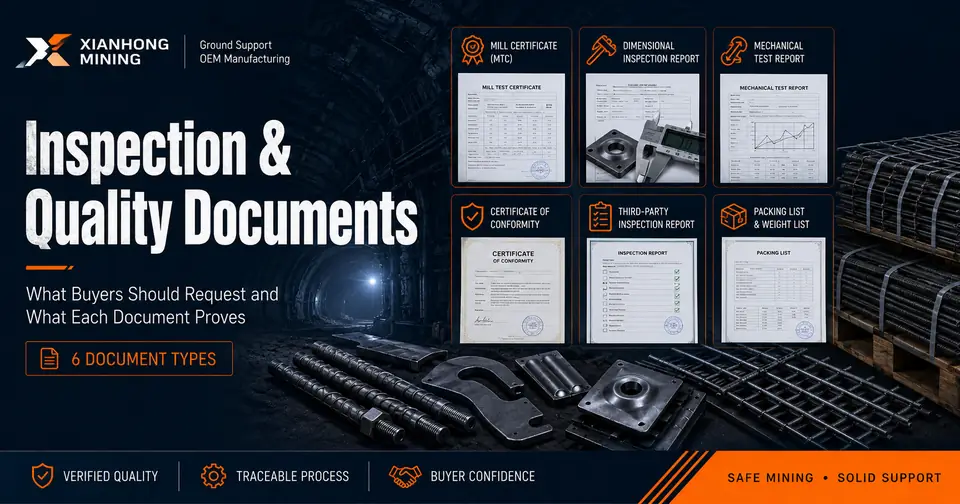
- Mining Ground Support Quality Documents: What Buyers Should Request and What Each Document ProvesA practical guide to six quality and inspection documents for mining ground support orders, explaining what each can prove, its limits, and what buyers should verify.
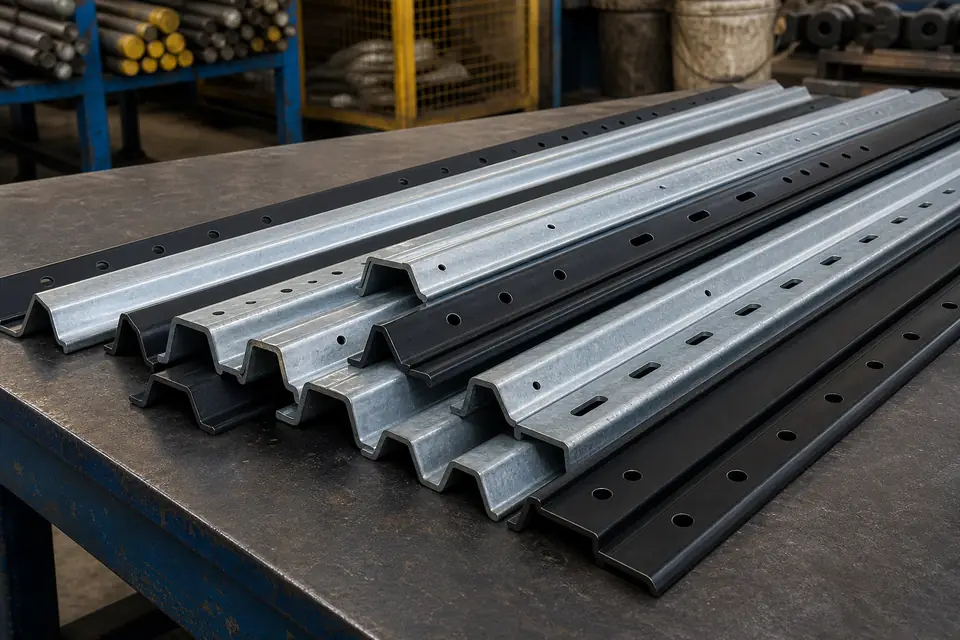
A W-strap drawing arrives at the manufacturer. The material grade is specified, but the thickness tolerance is missing. The hole spacing shown on the drawing conflicts with the specification sheet. The buyer expects a quotation within 48 hours.
What happens next determines whether the finished product matches the approved requirement or becomes the subject of a later dispute.
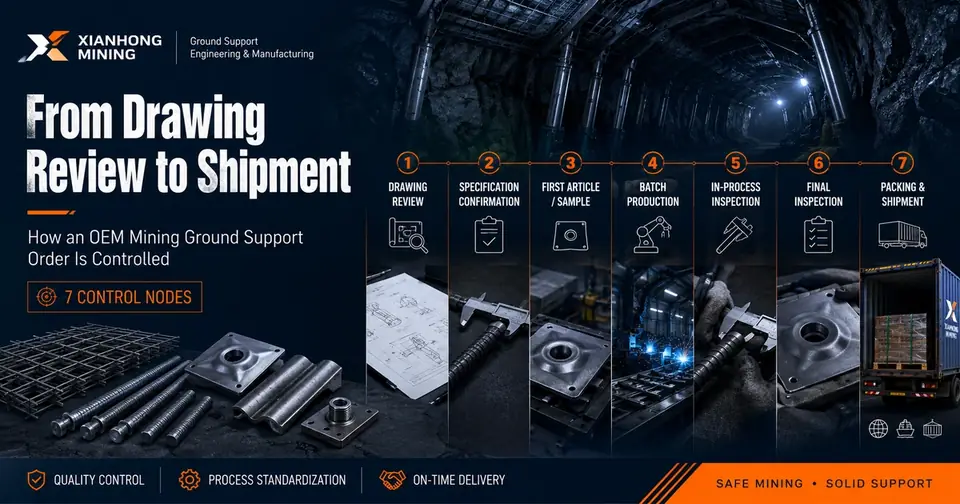
The key question is not simply whether a factory can make the product. It is how the factory controls the order so that the delivered goods match the approved drawing, specification, inspection requirements, and packing plan.
This article explains the seven-node OEM order-control framework used by Xianhong Mining, from drawing review to final shipment release. For each node, it identifies:
- what the manufacturer does;
- what records may be created; and
- what the buyer should confirm.
A W-strap example is used throughout the article to show how the control points work in practice.
The exact records, inspection points, buyer approvals, and document names may vary by product, order requirements, and the agreed quality plan.
| Control Node | Factory Action | Main Record | Buyer Checkpoint |
|---|---|---|---|
| 1 | Review documents, revision status, and manufacturability | Drawing Review Record | Confirm the correct revision and complete missing data |
| 2 | Establish the approved technical baseline | Technical Clarification Record | Approve specifications, tolerances, and deviations |
| 3 | Produce and inspect a sample or first article, when required | First Article Inspection Report | Approve the sample or first article |
| 4 | Release and control batch production | Production Order / Routing Sheet | Confirm the required production-release conditions |
| 5 | Perform in-process inspection and maintain traceability | In-Process Inspection Record | Confirm the agreed inspection plan |
| 6 | Complete final product inspection and release conforming goods for packing | Final Inspection Report | Review the final product inspection result |
| 7 | Verify packing, documents, and final shipment release | Packing and Shipment Release Records | Confirm the packing method and document package |
Important: This article provides general product and procurement information. Final product selection, support design, installation method, and suitability for site conditions must be confirmed by the buyer and a qualified project engineer.
Node 1: Drawing Receipt, Revision Control, and Manufacturability Review
The order-control process starts when the buyer submits the relevant technical information. This may include a drawing, specification sheet, sample photo, reference sample, inspection requirement, or previous approved document.
The manufacturer first records the document name, drawing number, revision, and date received. If the drawing does not include a clear revision identifier, the manufacturer asks the buyer to confirm the valid version. This step is essential because later decisions about dimensions, tolerances, materials, inspection, and production must all refer to the same approved document set.
The manufacturer then performs a manufacturability review. This is not support-system design and it is not an evaluation of site conditions. The purpose is to determine whether the component can be manufactured consistently using the available equipment, tooling, materials, and processes.
The review focuses on three practical areas:
- Tooling availability: whether existing dies, fixtures, or forming tools can cover the required size and profile;
- Material availability: whether the specified material grade can be sourced within the required lead time; and
- Process capability: whether operations such as forming, punching, welding, threading, or cutting can meet the approved requirement.
The practical question is:
Can this component be manufactured according to the documents provided by the buyer?
If information is missing or inconsistent, the manufacturer prepares a written list of open items. Typical issues include an incomplete material grade, missing dimensions, undefined tolerances, unclear hole or thread details, an unspecified surface treatment, or no stated inspection requirement.
W-strap example: The drawing shows the profile and nominal thickness, but no thickness tolerance. The hole spacing on the drawing also differs from the specification sheet. Both items are recorded as open technical questions before quotation or production.
Typical records:
- Drawing Review Record
- Manufacturability Review Feedback
- Open Item List
- Drawing Revision Register
Buyer checkpoints:
- The drawing revision is correct and current.
- The material grade is complete.
- Key dimensions are shown.
- Required tolerances are defined.
- Hole pattern and spacing are consistent.
- Surface treatment is specified.
- Inspection requirements are identified.
- No conflicting requirements remain from earlier documents.
Node 2: Technical Clarification and the Approved Specification Baseline
After the drawing has been registered and reviewed, the buyer and manufacturer must establish one authoritative technical baseline for the order.
This stage resolves differences between the drawing, specification sheet, reference sample, quotation notes, purchase order, and prior correspondence. If the drawing states one hole spacing and the specification sheet states another, production cannot rely on informal assumptions. The difference must be resolved in writing.
The manufacturer identifies dimensions without tolerances, incomplete material references, undefined profile details, missing accessory requirements, unclear inspection items, and any other information that could lead to different interpretations.
When the manufacturer has enough technical and manufacturing data to suggest a value, it may submit a proposal. Examples include a proposed manufacturing tolerance, a surface-finish requirement, or an inspection method. The proposal should be based on verified tooling capability, material behavior, and documented process data.
Any proposed value remains subject to documented buyer approval. The manufacturer does not change the buyer's requirement or establish a new acceptance criterion unilaterally.
Approved deviations and special requirements are also recorded. The result is an approved document package that becomes the sole technical reference for production and inspection. Verbal instructions do not replace this baseline.
W-strap example: The buyer confirms the required hole spacing and approves a thickness tolerance proposed after the manufacturer reviews the forming process and available material. The approved values are added to the specification baseline and drawing register.
Typical records:
- Technical Clarification Record
- Approved Specification Sheet
- Tolerance Proposal
- Deviation Approval Record
- Approved Drawing Register
Buyer checkpoints:
- Every open technical item is answered in writing.
- Proposed tolerances are accepted, rejected, or revised.
- Any approved deviation is clearly recorded.
- The final specification baseline is acknowledged before production release.
- The inspection and document requirements are included in the approved order information.
Buyer approval may be recorded through a signed document, email confirmation, procurement-system approval, or an agreed order-confirmation process. The important point is that the approval can be retrieved and linked to the order.
Node 3: Sample or First Article Approval, When Required
Not every order requires a new sample or first article. A repeat order may already have a valid approved sample or approved specification package. A simple standardized product may also proceed without a new first article if both parties agree.
The requirement should be defined during the technical-clarification stage and recorded in the approved order information.
For a buyer-focused approval baseline, inspection-record structure, deviation handling and production-release checklist, see First Article Approval for OEM Mining Ground Support Components.
When first article approval is required, the manufacturer produces a sample or initial production unit according to the approved drawing and specification. The manufacturer inspects the agreed characteristics, which may include dimensions, material, thread or rib profile, hole pattern, surface condition, marking, and specified performance requirements.
First Article Inspection (FAI) is the documented inspection of the first completed unit or initial production sample before batch production is released. The report records actual results against the approved requirements. It should not compare the product with an unrelated general standard unless that standard has been included in the order.
A retained physical sample is useful when practical, but it is not always suitable for long bolts, straps, or full mesh panels. Depending on the product, the retained reference may be a small section, a numbered sample, approved photographs, measurement records, or a combination of these items.
W-strap example: The first formed strap is checked for profile shape, thickness, width, hole diameter, and hole spacing. The measurements are recorded against the approved specification before batch production is released.
Typical records:
- Sample Approval Record
- First Article Inspection Report
- Approved Sample Photographs
- Retained Reference Sample, where practical
Buyer checkpoints:
- Whether a sample or FAI is required for the order.
- Whether the first article meets the approved specification.
- Whether modifications are required.
- Whether a revised first article must be submitted after a change.
- Whether documented approval has been completed before batch production.
Node 4: Production Release and Batch Production Control
Batch production begins only after the required technical and approval conditions have been completed. The manufacturer then issues a controlled production order to the workshop.
The released production package should identify the approved drawing and specification revision, planned quantity, material requirement, process route, equipment or tooling requirement, critical control points, batch-identification method, and scheduled completion date. Depending on the product and factory system, this information may be divided between a work order, routing sheet, material issue record, and production schedule.
The approved document set becomes the only valid production reference. Obsolete drawing versions should be withdrawn from use.
If a proposed change affects the approved material, dimensions, tolerance, product configuration, performance requirement, or acceptance criteria, it must receive documented buyer approval before implementation. Internal production adjustments that do not alter the approved product requirement may be controlled by the manufacturer through its own production procedures.
Raw materials, work in progress, and finished products are identified by order, batch, inspection lot, bundle, or packing unit, as applicable. The identification level depends on the product and the agreed traceability requirement. It should allow the relevant production and inspection records to be linked to the correct order or batch.
Critical operations should use the approved process parameters, tooling, or work instructions defined for the order.
W-strap example: The production order references the approved drawing revision, confirmed hole spacing, approved thickness tolerance, planned quantity, forming tool, punching requirements, and batch-identification method.
Typical records:
- Released Production Order
- Routing Sheet / Job Traveler
- Material Issue Record
- Production Schedule
- Batch Identification Record
- Change Approval Record, if applicable
Buyer checkpoints:
- The required approval gate has been completed before production begins.
- The production package refers to the correct drawing revision and specification baseline.
- Any change affecting the approved product requirement follows the documented approval process.
- The agreed batch-identification and traceability method is defined.
- Any buyer hold point or notification requirement is included in the order plan.
Node 5: In-Process Inspection and Traceability Records
During production, inspections are performed at defined process stages according to the agreed inspection plan. The inspection stages, characteristics, sample sizes, measuring methods, and acceptance criteria may differ by product.
For example, a rock bolt order and a bearing plate order will not necessarily use the same inspection points or sampling method. The inspection plan should reflect the approved specification, the manufacturing process, and any buyer-agreed hold points.
At each defined inspection stage, the manufacturer records the inspected quantity, sample size, measured results, acceptance decision, date, and inspector. The record should also identify the order, batch, or inspection lot so that the result does not exist as unlinked data.
This traceability allows an order, batch, or inspection lot to be connected to the relevant material, production, and inspection records. The exact traceability level should be agreed according to the product and order requirement.
If an inspection identifies a result outside the approved requirement, the affected material or product is controlled to prevent unintended use. The manufacturer then determines the documented disposition, such as rework, re-inspection, rejection, or buyer review where required.
W-strap example: During forming and punching, the manufacturer checks the agreed profile, thickness, width, hole diameter, and hole spacing at defined inspection stages. The results are linked to the production batch.
Typical records:
- In-Process Inspection Record
- Patrol Inspection Record
- Batch or Inspection-Lot Traceability Record
- Non-Conformance Record, if applicable
- Rework and Re-Inspection Record, if applicable
Buyer checkpoints:
- Inspection items and process stages are defined.
- Sampling and acceptance criteria are agreed where required.
- Buyer hold points or witness points are identified.
- The required inspection-record format is agreed.
- Record-submission and retention requirements are clear.
Node 6: Final Product Inspection and Release for Packing
After production is complete, the manufacturer performs the agreed final product inspection before the goods are released for packing.
Outgoing Quality Control (OQC) is the final product inspection conducted before packing and shipment preparation. Its purpose is to verify the finished goods against the approved drawing, specification, sample, purchase-order requirements, and agreed inspection plan.
The final product inspection may cover key dimensions, quantity, appearance, hole or thread condition, identification marks, surface treatment, and any agreed mechanical or material-document checks. The exact scope depends on the product and order.
The manufacturer reviews the available inspection and test documents against the order requirements. Any non-conforming result must receive a documented disposition. Products that meet the agreed requirements, or have received an approved disposition, may then be released for packing.
If a third-party inspection is required, its scope, timing, sampling basis, access requirements, and reporting format should be agreed early enough to avoid disrupting production or shipment.
W-strap example: The final inspection verifies the approved profile, thickness, width, hole diameter, hole spacing, surface condition, quantity, and identification marks before the batch is released for packing.
Typical records:
- Final Inspection Report
- OQC Record
- Final Product Inspection Checklist
- Non-Conformance Disposition Record, if applicable
- Release for Packing Record
Buyer checkpoints:
- The final product inspection result is reviewed against the approved requirements.
- The required material, dimensional, or mechanical records are available.
- Any third-party inspection requirement has been scheduled and completed.
- Any non-conformance has a documented disposition.
- The conditions for release to packing have been met.
Node 7: Packaging, Labeling, Export Documents, and Final Shipment Release
After the goods have been released for packing, the manufacturer applies the approved packing and labeling requirements.
For a field-by-field review of the commercial invoice, packing list, shipping instructions, and final transport document, see Shipping Document Verification for Mining Ground Support Orders.
The packing method may include bundling, palletizing, wrapping, edge protection, thread protection, anti-corrosion treatment, or other agreed measures. The manufacturer checks the quantity and weight of each packing unit and applies the approved labels or shipping marks.
The manufacturer then prepares the export and order documents agreed with the buyer. These may include the packing list, commercial invoice, certificate of conformity, inspection reports, and other specified documents. Not every order requires every document. The required document package should be agreed before quotation or order confirmation.
For a buyer-side consistency check across the commercial invoice, packing list, shipping instructions, and carrier-issued transport documents, see our Shipping Document Verification for Mining Ground Support Orders.
Before final shipment release, the manufacturer verifies the completed packing, labels, quantities, weights, document package, and any agreed loading record. When the release conditions are complete, the order may proceed to loading and shipment.
Destination-country import, certification, labeling, and customs requirements must be confirmed by the buyer, importer, or appointed freight forwarder before production and shipment. Xianhong prepares the documents and markings agreed in the order, but does not determine the buyer's destination-country compliance obligations.
W-strap example: The approved straps are bundled to the agreed quantity and unit-weight limit. Labels identify the order and product specification. The packing list and shipping marks are checked before final shipment release.
Typical records:
- Packing Confirmation Record
- Packing List
- Commercial Invoice
- Shipping Mark or Label Approval
- Certificate of Conformity, if agreed
- Container Loading Record, if applicable
- Final Shipment Release Checklist
Buyer checkpoints:
- The packing method and unit-weight limits are approved.
- Label and shipping-mark requirements are complete.
- The agreed document list is confirmed.
- Any special certification or import-document requirement is identified before production or shipment.
- Freight-forwarder loading and port-operation requirements are communicated.
- The final shipment-release conditions are complete.
Summary
A controlled OEM order does not depend on verbal understanding. It depends on an approved technical baseline, a documented production release, linked inspection records, controlled packing, and clearly agreed shipment requirements.
Each control node should create a record that can be linked to the relevant order, drawing revision, batch, inspection lot, or packing unit. The exact document package varies by product and order, but the control principle remains the same: production and shipment should follow approved information.
Xianhong uses this seven-node framework to control OEM orders. The exact records, inspection points, approval steps, and document package vary according to the product, order requirements, and agreed quality plan.
If you have a drawing for a mining ground support component, Xianhong can review it for manufacturability and identify the technical information required before quotation or production.
You will receive a structured manufacturability review and a written list of open technical items.
Submit Your Drawing for OEM Review
For more information about manufacturing scope, order control, and supply evidence, visit the OEM Manufacturing page.
Final product selection, support design, installation method, and suitability for site conditions must be confirmed by the buyer and a qualified project engineer.