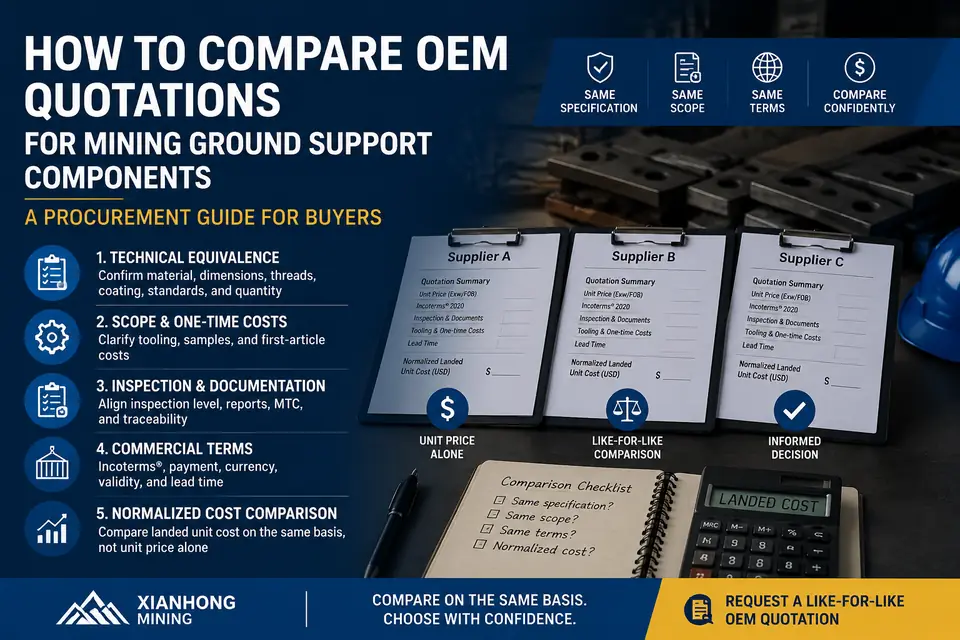

PART OF · OEM Mining Ground Support Procurement
Xianhong Mining can prepare and review commercial, packing, product-identification, and shipment information against the buyer-approved order and shipping instructions. Document requirements vary by destination country, Incoterms® rule, transport mode, payment method, carrier, bank, customs procedure, and project requirements. The buyer, importer, customs broker, freight forwarder, bank, carrier, and other responsible parties must confirm the wording, customs classification, certification, tax, duty, import-clearance, banking, and destination-specific document requirements applicable to the shipment.
Example scenario: Consider a hypothetical shipment in which production and the agreed final product inspection are complete. Before cargo handover or loading, the supplier sends a draft commercial invoice and packing list for review, together with confirmed shipping instructions and any draft carrier data available at that stage.
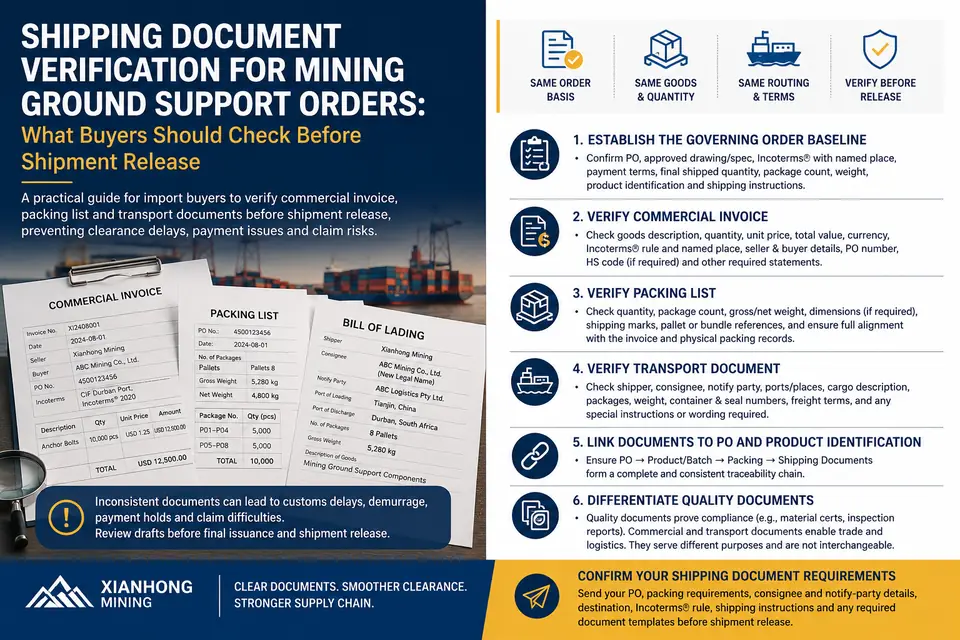
The invoice lists 10,000 pieces. The packing list shows 9,800. The consignee information uses an outdated company name. The PO number is missing. The invoice states only “CIF,” without the named destination port. The packing list refers to pallets P01–P08, but those references do not match the physical pallet labels.
If these discrepancies are not corrected while the information is still editable, they can flow into later carrier documents, customs filings, payment processing, warehouse receiving, or claim handling.
Shipping documents should describe the same shipment from different operational perspectives — not different versions of the shipment.
1. Why Shipping Document Consistency Matters
The commercial invoice, packing list, and transport document serve different purposes, but they describe the same transaction and physical shipment.
- The commercial invoice describes the commercial sale and, where applicable, supports customs declaration.
- The packing list describes how the cargo is physically divided, identified, and packed.
- The transport document records carriage information issued by the carrier or transport operator.
Consistency does not mean that every document must contain identical fields or wording. It means that shared facts — such as product identity, shipped quantity, package count, parties, routing references, and other applicable shipment data — do not contradict each other or the buyer-approved order.
Document control is strongest before information becomes final. Depending on the appointed carrier or freight forwarder, a draft or verification copy may be available for review and amendment before final issuance. For ocean freight, the timing of the final bill of lading also depends on the appointed carrier's process and the relevant loading or departure milestone. Therefore, buyers should confirm the workflow and cutoff with the appointed carrier or forwarder and separate:
- pre-shipment verification of packing, invoice, shipping instructions, and available carrier data; and
- final-document verification after the carrier issues the final transport record.
The objective is not to wait until every final document exists before releasing cargo. It is to verify each item at the earliest stage when it can be controlled.
2. Establish the Governing Order and Document Hierarchy
Before comparing documents, establish the approved information hierarchy for the shipment. When two documents disagree, the question should be: which approved record controls this field?
Commercial Baseline
Typical records include:
- purchase order;
- contract or approved order confirmation;
- accepted quotation;
- agreed currency and payment terms;
- Incoterms® rule, version, and precise named place or port;
- approved commercial deviations.
Technical Baseline
Typical records include:
- approved drawing revision;
- approved product specification;
- approved material, interface, marking, and inspection requirements;
- documented technical deviations or clarifications.
For the production baseline, see the OEM Drawing Review Guide.
Shipment Baseline
Before document finalization, confirm:
- actual shipped quantity;
- package count;
- verified or agreed shipment weights;
- product, batch, and package identification;
- packing configuration;
- consignee and notify-party instructions;
- destination and routing instructions;
- buyer-required document set;
- any bank, broker, or carrier wording supplied by the responsible party.
The source of truth may therefore be a controlled set of approved records rather than one document. If an original PO called for 10,000 pieces but the buyer later approved a partial shipment of 9,800, the current shipping documents should reflect the approved 9,800-piece shipment while the remaining balance is controlled separately.
3. Commercial Invoice: What Buyers Should Verify
The buyer should review at least the following fields:
- Goods description: Clear enough to identify the goods and match the approved order. The level of detail required for customs purposes depends on the destination and declaration procedure.
- Quantity and unit of measure: Match the approved shipment baseline.
- Unit price and total value: Match the approved commercial basis, including any agreed partial-shipment treatment or separate charges.
- Currency: Match the transaction currency.
- Incoterms® rule and named place: Use the complete agreed reference, for example
CIF Durban Port, Incoterms® 2020, rather thanCIFalone. - Seller and buyer details: Match the approved commercial records.
- PO / order reference: Allow the invoice to be traced to the governing order.
- Origin or customs references, if required: Include only where required by the agreed document list or destination procedure.
The Incoterms® rule belongs to the commercial baseline. A carrier transport document does not necessarily repeat the Incoterms® rule, so buyers should not create a false mismatch simply because the B/L or waybill does not display it.
If an HS code or classification reference is required on the invoice, Xianhong Mining can reproduce an agreed reference. Final import classification, declaration, and destination-country customs treatment remain the responsibility of the importer and its appointed customs professional.
Incoterms® rules allocate agreed delivery obligations, costs, and risks between seller and buyer. They do not replace the sales contract or by themselves determine product quality, payment terms, or ownership/title transfer.
4. Packing List: Quantity, Weight and Package References
The packing list should allow the buyer, warehouse, forwarder, or inspector to understand the shipment structure and map paper records to physical packages.
Check:
- Shipped quantity: Reconcile with the approved shipment baseline and invoice where the same quantity is stated.
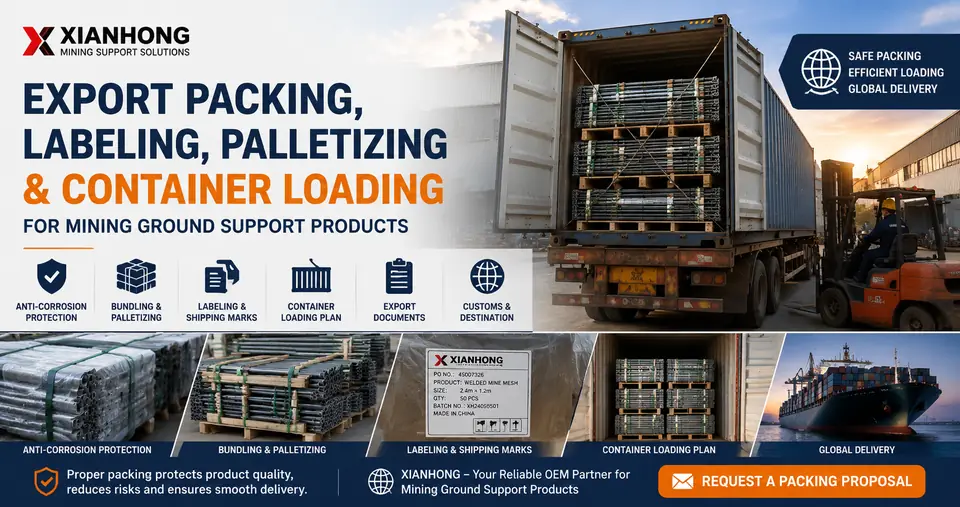
- Package count: Match the actual cartons, bundles, pallets, crates, or other packing units.
- Gross and net weights: Use verified or agreed shipment data. Where the same weight field appears elsewhere, the values should reconcile.
- Package references: Pallet, crate, bundle, or package IDs should match physical labels.
- Shipping marks: Match physical package marks where used.
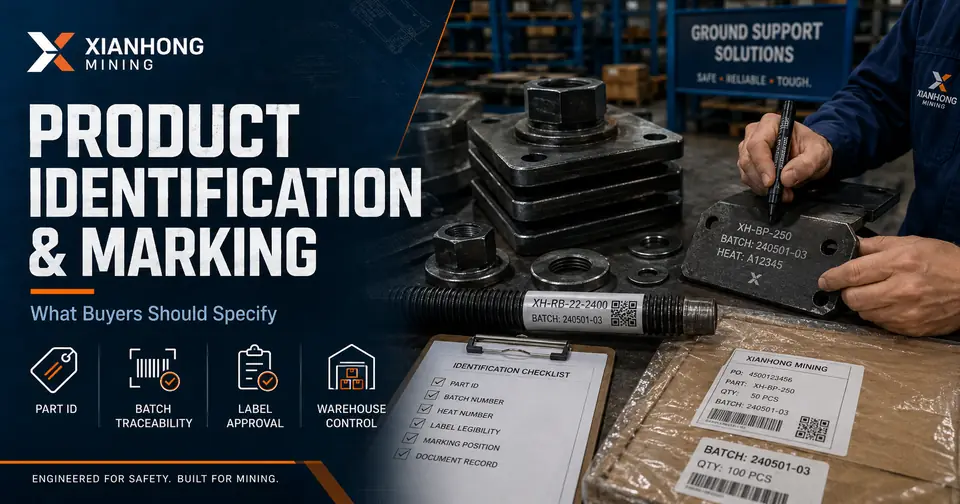
- Part / product identification: Part numbers, buyer item codes, batch numbers, or other identifiers should map to the approved order and physical marking system.
- Contents by package: Where required, identify product, quantity, batch, and weight by pallet or crate.
- Totals: Package-level quantities and weights should reconcile to the shipment total.
Not every invoice or transport document carries the same weight fields, so the control rule is not “every document must show the same weight.” It is: where the same verified fact is repeated, it should reconcile.
For package-level identification, see Product Identification and Marking for OEM Mining Ground Support Components.
5. Transport Document: Parties, Routing and Cargo Data
“Transport document” is used here as a general term. Depending on the transport mode and transaction, it may be a bill of lading, sea waybill, air waybill, road consignment note, rail consignment note, or another carrier-issued document.
The legal effect and available fields vary by document type. Review the document against the approved shipping instructions and carrier booking data rather than assume that it must duplicate the commercial invoice.
Parties
- Shipper: Confirm the party required by the booking and shipping instructions. The shipper does not automatically have to be identical to the commercial-invoice seller.
- Consignee: Confirm the party or wording required by the contract, payment method, carrier process, and import arrangement. It does not automatically have to be the commercial buyer.
- Notify party: Confirm the buyer-approved party where applicable.
Routing
- place or port of receipt/loading;
- port or place of discharge/delivery;
- final destination or place of delivery, where the document uses that field.
Routing data should match the booking and approved shipping instructions. The transport-document place of delivery does not automatically have to be identical to the Incoterms® named place because the two fields serve different contractual functions.
Cargo Data
Confirm, where applicable:
- goods description;
- number and kind of packages;
- gross weight;
- container number;
- seal number;
- marks and numbers.
Carriage Instructions
- Freight prepaid / collect: Confirm against the carrier booking and carriage arrangement. This field does not map one-to-one to an Incoterms® rule.
- Document type / release method: Confirm whether the transaction requires an original B/L, sea waybill, electronic release, or another carrier-supported method.
- Special clauses / references: Include only wording required by the contract, bank, buyer, broker, or carrier process.
For example, Maersk describes a workflow in which bill-of-lading data is created from shipping instructions and a copy may be reviewed before final issuance. Other carriers and forwarders may use different steps, fields and cutoffs. Confirm the appointed provider's process, verify shipping-instruction data at the earliest available stage, and re-check the final transport document when issued.
6. Link the Order, Physical Shipment and Documents
A practical control chain is:
PO / Order → Approved Specification → Product / Batch Marking → Packing Records → Packing List → Commercial Invoice → Shipping Instructions → Transport Document
Not every identifier belongs on every document. A material heat number, for example, may belong in quality and traceability records rather than on the bill of lading.
The objective is mappability, not duplication. If a claim concerns one bearing plate, the buyer should be able to follow the agreed traceability chain from the physical product to its pallet, batch, inspection record, material evidence, and order reference.
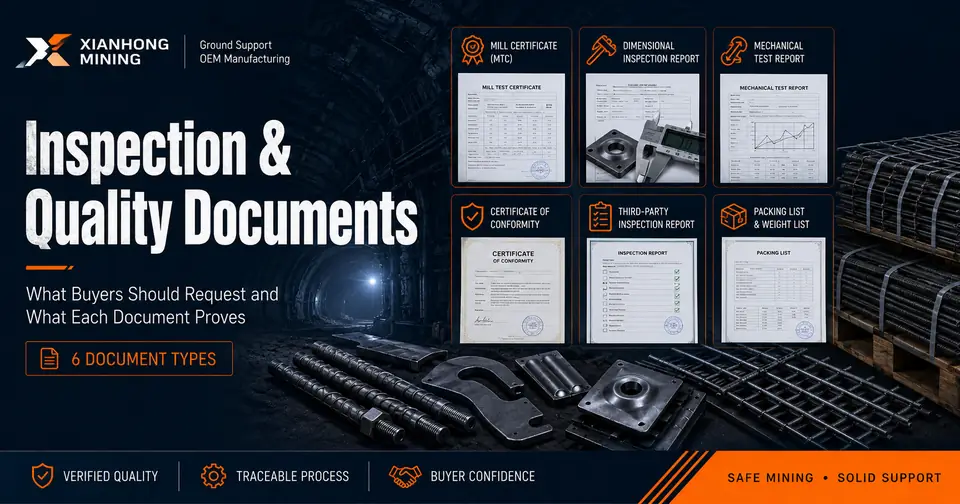
For the role of quality evidence in this chain, see Mining Ground Support Quality Documents.
7. Separate Quality, Commercial, Transport and Compliance Documents
| Document Family | Primary Question |
|---|---|
| Technical / Quality | Does the product meet the approved technical and inspection requirements? |
| Commercial / Packing | What was sold and how is the physical shipment organized? |
| Transport | What cargo is being carried under the carrier’s transport record? |
| Origin / Customs / Compliance, when required | What origin, declaration, licence, certification, or regulatory evidence is required for the specific trade lane? |
Technical / quality documents may include material certificates, inspection reports, test reports, first-article records, and batch traceability records.
Commercial / packing documents typically include the commercial invoice and packing list.
Transport documents may include a bill of lading, sea waybill, air waybill, or another mode-specific carrier document.
Origin / customs / compliance documents, when required, may include certificates of origin, preferential-origin documents, customs declarations, or destination-specific certificates.
Not every order needs every document. The required document list should be confirmed for the specific transaction before shipment preparation.
8. Common Shipping Document Mismatches
Before release, check for:
- invoice quantity different from the approved shipped quantity or packing list;
- package count that does not reconcile with actual pallets or bundles;
- repeated weight fields that do not reconcile with verified shipment data;
- outdated or incorrect buyer, importer, consignee, or notify-party details;
- missing or inconsistent PO / order references;
- product descriptions that create conflicting product identities;
- part numbers or buyer item codes inconsistent with approved records;
- shipping marks or pallet references that do not match physical packages;
- invoice Incoterms® rule or named place different from the approved commercial baseline;
- carrier routing different from approved shipping instructions or booking;
- container or seal data transposed or not updated after loading, where applicable;
- batch or pallet references that cannot be mapped to product-identification or quality records.
These mismatches do not automatically mean that customs will reject the shipment. Depending on the destination, payment method, carrier, broker, bank, and transaction structure, they may trigger clarification, amendments, payment discrepancies, warehouse receiving problems, or difficulty supporting a later claim.
9. From Draft Documents to Final Document Release
A controlled workflow is:
- Confirm final shipped quantity.
- Complete packing records.
- Check product, bundle, pallet, and shipping marks.
- Prepare the draft commercial invoice.
- Prepare and reconcile the draft packing list.
- Confirm buyer shipping instructions in writing.
- Review carrier booking / shipping-instruction data and any available draft transport-document copy.
- Close pre-shipment discrepancies before cargo handover or loading where the workflow allows.
- Re-check the final transport document after carrier issuance.
- Archive and distribute the final approved document pack.
For ocean freight, the final bill of lading may not be available before loading or departure under the appointed carrier's process. The pre-shipment gate should therefore focus on the data available for review at that stage, followed by a final carrier-document check after issuance. Confirm the actual timing and amendment cutoff with the appointed carrier or forwarder.
10. Buyer Shipping Document Verification Matrix
Use N/A where a field is not expected on a document.
| Verification Field | Governing Reference | Commercial Invoice | Packing List | Shipping Instructions / Transport Document | Status |
|---|---|---|---|---|---|
| Product / goods identity | PO / approved order | ||||
| Shipped quantity | Shipment baseline | ||||
| Package count | Packing record | ||||
| Gross weight | Verified shipment data | ||||
| Buyer / seller details | Contract / order | N/A if not used | |||
| Consignee / notify party | Shipping instructions | N/A if not used | N/A if not used | ||
| PO / order reference | Approved order | If required | |||
| Incoterms® rule + named place | Commercial baseline | N/A | Usually N/A | ||
| Port / place / routing | Booking / shipping instructions | If required | If required | ||
| Shipping marks / package refs | Packing record / physical marks | If required | If used | ||
| Part / batch references | Traceability plan | If required | Usually N/A | ||
| Container / seal number | Loading / carrier record | N/A | If required |
The matrix is not a rule that every cell must contain the same value. It checks that where the same fact appears in more than one place, it reconciles with the governing reference.
Download the Shipping Document Verification Checklist
Use the printable checklist to record the shipment baseline, reconcile invoice and packing data, verify shipping instructions and carrier-document fields, log discrepancies, and complete the final document review.
Download Xianhong Shipping Document Verification Checklist 2026 08 (PDF)
11. FAQ
Must all shipping documents use exactly the same product description?
No. The level of detail may differ because each document serves a different purpose. The essential requirement is that the descriptions do not create contradictory product identities or quantities and can be mapped to the approved order.
Who should confirm the HS code and destination import-document requirements?
The supplier can reproduce an agreed HS code or classification reference when requested. Final import classification, customs declaration, and destination-country clearance requirements remain with the buyer, importer, or appointed customs broker.
Should the buyer review a draft bill of lading before final issuance?
Where the carrier workflow provides a draft or verification copy, key fields should be reviewed against the approved shipping instructions before the amendment cutoff. If the final B/L is issued only after loading or departure, re-check it after issuance.
Must the shipper on the transport document always be the seller on the commercial invoice?
No. The required shipper depends on the carrier booking, exporter arrangement, contract, payment method, and destination requirements. Confirm the party through approved shipping instructions rather than assume that the two fields must always be identical.
Can quality documents replace the commercial invoice or packing list?
No. Quality documents, commercial / packing documents, and transport documents answer different questions. The required categories should be confirmed for the specific order.
12. Final Shipment and Document Release Review
Before cargo handover or loading, confirm all information that can reasonably be verified at that stage: final quantity and package count, packing and physical identification, draft commercial invoice and packing list, buyer shipping instructions, parties, routing, the required document set, and carrier draft / verification data where available.
After the final transport document is issued, complete the final consistency check and archive the document pack.
The objective is not to make every document look identical. It is to make the data chain consistent:
Approved Order → Physical Shipment → Packing Records → Commercial Documents → Shipping Instructions → Final Transport Record
Confirm Your Shipping Document Requirements
Send your purchase order, approved product references, packing requirements, consignee and notify-party details, destination, Incoterms® basis, shipping instructions, and any buyer / broker / bank document templates before shipment preparation is finalized.
Xianhong Mining can prepare and review the manufacturer-controlled commercial, packing, identification, and shipment information against the buyer-approved order. Carrier-issued transport documents, destination-country import requirements, customs classification, bank wording, taxes, duties, and legal compliance remain subject to confirmation by the responsible buyer, importer, carrier, broker, freight forwarder, bank, or other appointed party.
Responsibility boundary: This article provides general procurement and document-control information. Final product selection, ground-support design, installation method, and site suitability remain with the buyer and qualified project authority. Destination-country import, certification, customs classification, banking, transport-document, tax, duty, and legal requirements must be confirmed by the responsible buyer, importer, customs broker, carrier, freight forwarder, bank, or other appointed party for the specific shipment.
Sources and evidence basis
- ICC Incoterms® 2020external
- UN/CEFACT Verifiable Trade Documents - Bill of Ladingexternal
- Maersk - What Is a Bill of Lading?external
- Maersk - Amend or Approve the Copyexternal
- Xianhong Mining OEM Procurement Pillarinternal
- Xianhong Mining Export Packing Guideinternal
- Xianhong Shipping Document Verification Checklist resource recordinternal
- Xianhong Shipping Verification cover resource recordinternal