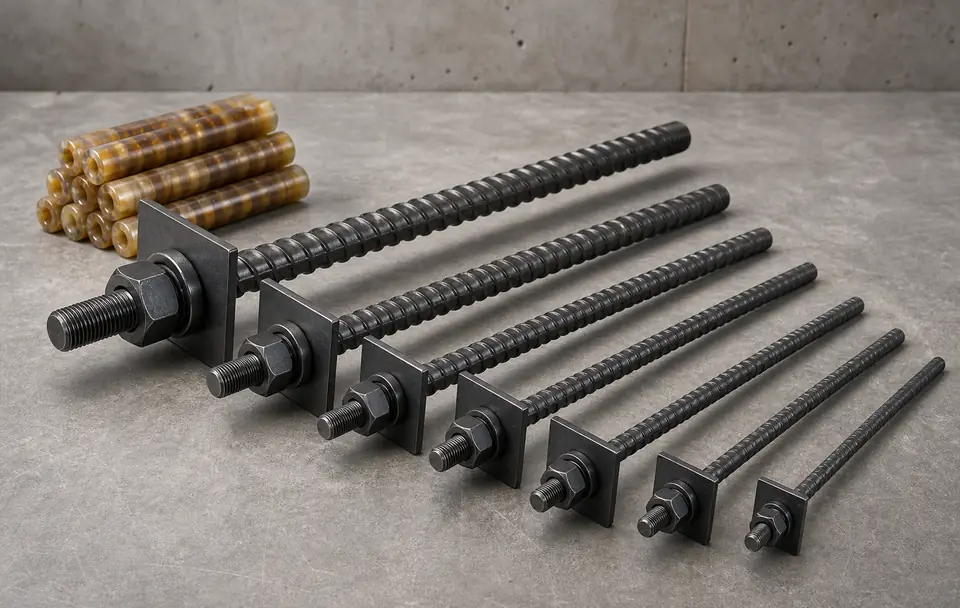

A buyer orders 10,000 rock bolt bars. The bars arrive at the project site, while the nuts are purchased separately. When the installation crew attempts to assemble them, the nuts will not engage. The nominal diameter appears correct, but the thread direction is wrong. The bolts cannot be installed until compatible nuts are sourced.
Rock bolt nuts are not standalone fasteners. They are matched components. Their thread, geometry, mechanical requirements and seating arrangement must be compatible with the bolt, bearing plate, washer and installation tooling defined in the approved assembly.
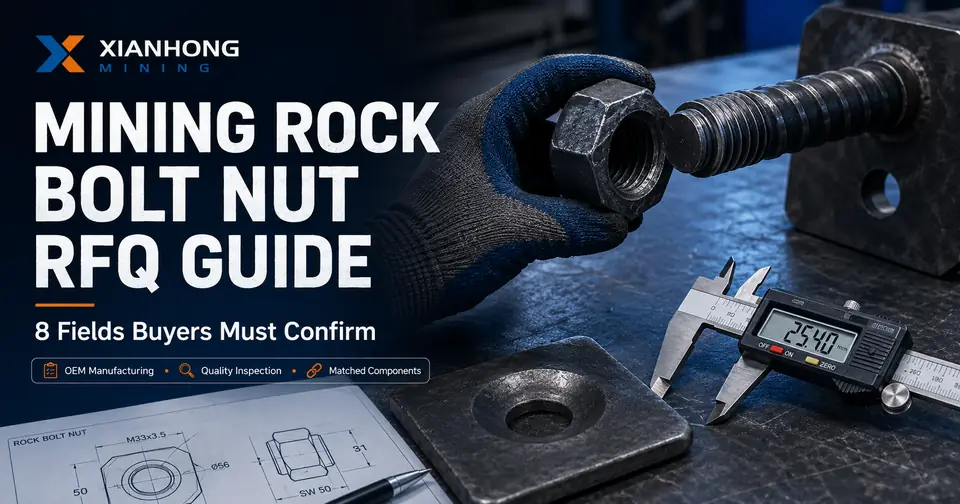
This guide explains the eight specification fields a buyer should confirm when requesting a quotation for mining rock bolt nuts. The focus is procurement communication: defining the component clearly enough for manufacturability review, quotation, inspection and packing.
Responsibility boundary: This article provides general product and procurement information. Final product selection, support-system design, installation requirements and suitability for site conditions must be confirmed by the mine owner, buyer, qualified engineer or approved technical authority. Xianhong Mining manufactures against buyer-approved drawings, specifications, samples, inspection requirements and order documents; it does not assume responsibility for site-specific ground support design.
Mining Rock Bolt Nut RFQ Specification Checklist
| # | RFQ field | Why it matters | Procurement risk if missing |
|---|---|---|---|
| 1 | Mating Bolt Specification | The nut specification depends on the bolt thread, diameter, direction, coating condition and approved interface. | The supplied nut may not engage the bolt or may not match the approved assembly. |
| 2 | Thread Form, Designation, Pitch and Direction | ISO metric, DIN 405 knuckle thread and buyer-defined profiles use different geometry, tolerances and gauging systems. | The supplier may quote or manufacture a non-matching thread. |
| 3 | Nut Geometry and Seating Arrangement | External geometry and bearing-face configuration determine how the nut interfaces with the plate, washer and installation tool. | The nut may not seat or assemble as required by the approved drawing. |
| 4 | Critical Dimensions and Tolerances | Across-flats size, height, engagement depth, bearing-face dimensions and thread tolerances define acceptance. | Fit may be inconsistent, and the buyer may lack an agreed basis for acceptance or rejection. |
| 5 | Material and Mechanical Requirements | Material, property class, proof load and hardness must follow the applicable standard or buyer-approved specification. | The supplied nut may not meet the required mechanical acceptance criteria. |
| 6 | Surface Treatment and Thread Allowance | Coating affects corrosion protection, final thread dimensions and gauging condition. | Coating buildup or an undefined allowance may prevent assembly or create disputed inspection results. |
| 7 | Inspection, Gauging and Documentation Requirements | The inspection method must match the thread system and the agreed acceptance plan. | The shipment may arrive without adequate evidence of dimensional, thread or batch conformity. |
| 8 | Packing and Matched-Component Control | Packing, identification and compatibility checks connect the nut batch to the relevant bolt or assembly requirement. | Components may be mixed, mislabeled or shipped without a documented compatibility check. |
1. Mating Bolt Specification
The nut is a matched component. Its specification cannot be finalized without identifying the bolt or bar it must engage.
Before requesting a quotation, the buyer should provide the approved bolt drawing, model, part number, standard reference or physical sample. The information should identify the thread form, nominal designation, direction, pitch, relevant diameters, coating condition and any mechanical requirement that affects the nut interface.
The nominal bolt diameter alone is not enough. Two components may share a similar nominal description while using different thread profiles, pitches or directions.
What the buyer should provide
- Approved bolt drawing number and revision
- Bolt or bar model and part number
- Thread form and nominal designation
- Thread direction: left-hand or right-hand
- Pitch and applicable standard
- Relevant thread diameters and tolerances, where drawing-controlled
- Bolt material or property class, where applicable
- Bolt surface treatment and final thread condition
- Confirmation of whether the bolt is supplied by Xianhong Mining or another source
- A physical sample or approved mating component when the drawing does not fully define the interface
Why it matters
A nut quotation based on assumptions can be commercially accurate but technically unusable. The manufacturer needs the mating-bolt information to determine whether the requested thread can be produced, gauged and verified against the approved requirement.
For related bar specifications, see the Steel Resin Rock Bolts product page and the Resin Rock Bolt Bar Specifications procurement guide.
2. Thread Form, Designation, Pitch and Direction
The RFQ should identify the exact thread system. Possible requirements include:
- ISO metric thread
- DIN 405 general-purpose knuckle thread
- Another recognized standard thread
- A buyer-defined or proprietary profile controlled by an approved drawing or sample
DIN 405 defines general-purpose knuckle threads. An approved drawing may use an Rd designation. Terms such as round thread, knuckle thread, rope thread and Rd thread are sometimes used inconsistently across markets and catalogues, so the RFQ should rely on the exact designation and standard shown on the approved drawing rather than a generic name.
Thread direction must also be stated explicitly. A left-hand internal thread will not engage a right-hand external thread, even when the nominal diameter and pitch appear similar.
What the buyer should provide
- Thread form or profile
- Standard number and applicable edition
- Nominal thread designation exactly as shown on the drawing
- Pitch
- Left-hand or right-hand direction
- Required internal-thread engagement depth
- Thread runout, chamfer or lead-in requirements, where controlled
- Required gauging or mating-fit method
Important distinction
An ISO metric tolerance class such as 6H applies only when the internal thread is specified within the relevant ISO metric thread system. It should not be applied automatically to DIN 405 or buyer-defined threads. Those systems require their own drawing, tolerance and gauging requirements.
Procurement risk if missing
The supplier may be unable to identify the correct tooling and gauges, or may quote a thread based on an incomplete description. The mismatch may not be discovered until sample approval, final inspection or site assembly.
3. Nut Geometry and Seating Arrangement
Thread compatibility confirms that the nut can engage the bolt. It does not confirm that the nut will seat correctly against the bearing plate, washer or other interface component.
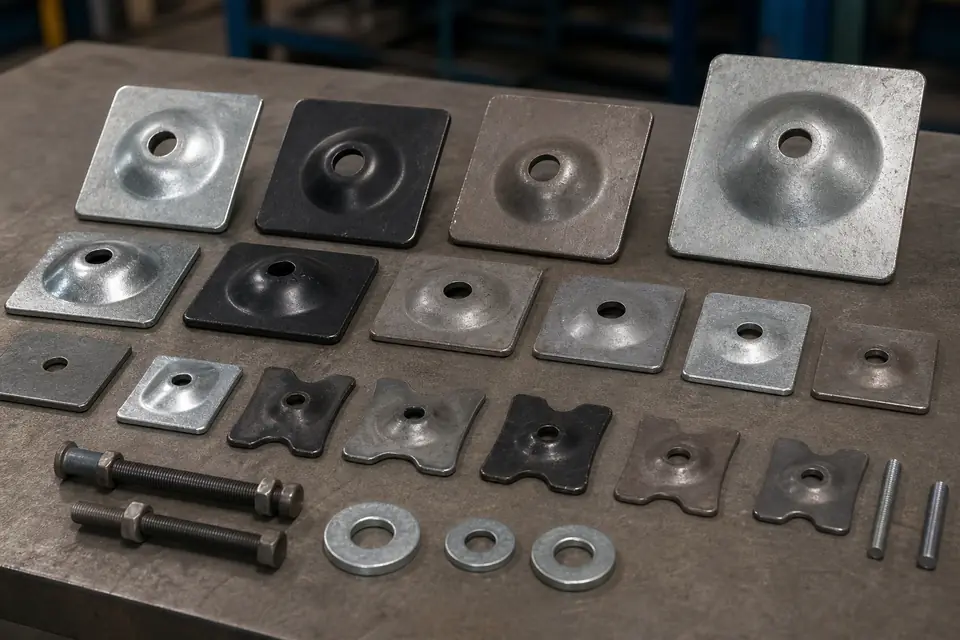
The buyer should define the nut body and bearing-face geometry using an approved drawing. Possible configurations include hexagonal, flanged, square-drive or another buyer-defined geometry. A spherical washer, dome ball or other seating component should be specified separately unless it is physically integrated into the approved nut design.
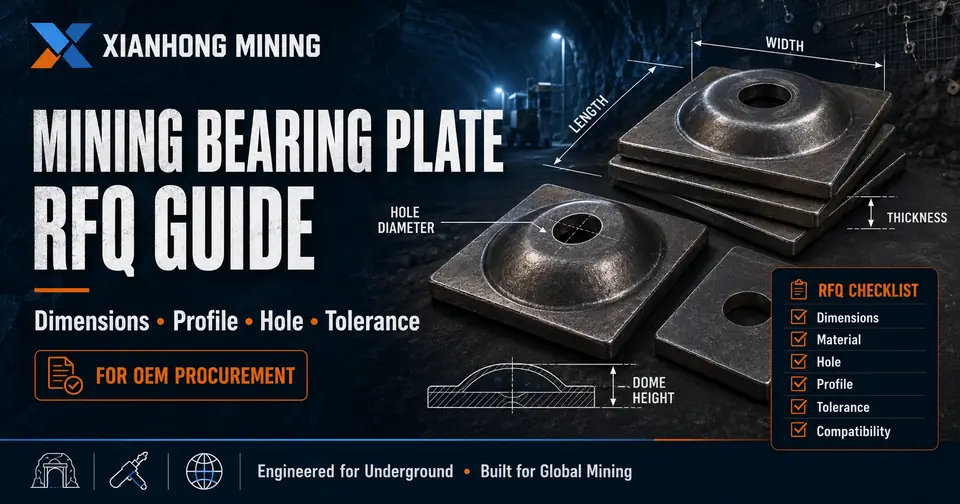
A domed bearing plate, flat plate and counterbored plate can require different seating arrangements. The buyer should therefore define the nut, plate and washer interface as one controlled assembly.
What the buyer should provide
- Nut body geometry
- Width across flats or other tool-interface dimensions
- Overall nut height
- Bearing-face diameter and profile
- Flange diameter and thickness, where applicable
- Flat, spherical or buyer-defined seating requirement
- Bearing plate profile: flat, domed, counterbored or other
- Washer, spherical washer or dome-ball requirement
- Confirmation of whether seating components are included in the supply scope
- Installation socket, wrench or drive interface
Procurement risk if missing
The nut may engage the thread but fail to seat or assemble in the way required by the approved drawing. This can create rework, tool incompatibility or an unresolved component-interface dispute.
For a broader interface review, see Mining Ground Support Component Interfaces: A Buyer's Compatibility Checklist.
4. Critical Dimensions and Tolerances
Critical dimensions define whether the nut can be manufactured, inspected and accepted consistently.
Typical dimensional fields include:
- Width across flats (AF)
- Width across corners, where required
- Overall nut height
- Full-thread or effective engagement depth
- Bearing-face diameter
- Flange diameter and thickness
- Chamfer and lead-in geometry
- Concentricity, perpendicularity or flatness, where drawing-controlled
- Internal thread tolerance and gauging requirement
The RFQ should separate critical dimensions from general manufacturing dimensions. Each critical field should have a nominal value, tolerance and inspection method.
What the buyer should provide
- Nominal dimensions and tolerances
- Drawing number and revision
- Applicable general tolerance standard, if used
- Thread tolerance class for ISO metric threads, where applicable
- DIN 405 tolerance requirements or buyer-defined limits, where applicable
- Datum and geometric controls, when required
- Inspection sample size or 100% inspection requirement, if applicable
Procurement risk if missing
Without agreed tolerances, the buyer and manufacturer may interpret the same drawing differently. The buyer may also lack a documented basis for accepting or rejecting measured results.
Procurement note: Do not use a nominal thread name as a substitute for a complete tolerance and gauging requirement.
5. Material and Mechanical Requirements
Dimensions define the component geometry. Material and mechanical requirements define the acceptance basis for the nut body and thread under the specified test conditions.
For ISO metric steel nuts that fall within the scope of ISO 898-2, the buyer may specify a nut property class and related proof-load requirements. Bolt, screw and stud property classes are covered separately by ISO 898-1. Compatibility should be confirmed using the applicable standard, dimensions and approved assembly requirement; it should not be inferred only by comparing two property-class numbers.
Mining-specific nuts may fall outside the dimensional, thread or application scope of ISO 898-2. In those cases, the buyer-approved drawing, material specification, proof-load requirement, hardness range and agreed test method should govern.
What the buyer should provide
- Material grade or buyer-approved material specification
- Applicable nut property class, where the standard applies
- Proof-load or other mechanical acceptance requirement
- Hardness range, where required
- Heat-treatment requirement, where applicable
- Bolt material or property-class reference for interface review
- Test method, specimen requirement and acceptance limit
- Applicable standard and edition
Procurement risk if missing
The supplier may quote a dimensionally correct nut without a defined mechanical acceptance basis. Mechanical requirements added after quotation can change material selection, process route, inspection scope, cost and lead time.
6. Surface Treatment and Thread Allowance
The RFQ should identify the required final surface condition and the thread condition at inspection.
Possible requirements may include:
- Plain or oiled finish
- Black oxide or another specified black finish
- Electroplated zinc or zinc-alloy coating
- Hot-dip galvanized coating
- Zinc-flake or another buyer-approved coating system
These terms are not interchangeable. Black should not be used without clarifying whether it means plain, oiled, black oxide or another finish.
ISO 4042 covers electroplated coating systems for fasteners. Hot-dip galvanized fasteners are addressed separately by ISO 10684 when the product falls within that standard's scope. Buyer-defined or mining-specific threads may require additional coating allowance and final mating verification beyond a standard coating reference.
What the buyer should provide
- Coating or final finish
- Applicable coating standard and edition
- Required coating thickness or designation
- Whether thread dimensions are controlled before or after coating
- Required final thread gauge condition
- Required mating-fit check after coating
- Lubrication or anti-seize requirement, only when specified by the approved installation requirement
- Corrosion-protection and packing requirements for transport
Procurement risk if missing
If coating thickness and final thread acceptance are not defined, the nut may pass a pre-coating dimensional check but fail a post-coating assembly check. Conversely, an undefined oversize allowance can also create disputed inspection results.
7. Inspection, Gauging and Documentation Requirements
Inspection requirements should define what will be checked, when it will be checked, how it will be checked and what evidence will be supplied.
Thread gauging must match the specified thread system. ISO metric gauges cannot be assumed to verify DIN 405 or buyer-defined threads. DIN 405-3 addresses gauges for DIN 405 external and internal threads. For proprietary profiles, the buyer may need to provide an approved gauge, master sample or fully defined inspection method.
The document package should also be agreed before production. Depending on the order, it may include:
- Material certificate or mill document
- Dimensional inspection report
- Thread gauging record
- Mating-fit verification record
- Hardness or proof-load test report
- Certificate of Conformity
- Third-party inspection report
- Packing list and batch identification record
Not every document or test is included by default. The scope, issuer, sample size, acceptance criteria and report format should be agreed in the quotation and purchase order.
What the buyer should provide
- Inspection items and acceptance criteria
- Thread gauge type and applicable standard
- Requirement for GO/NO-GO gauging, mating-fit verification or both
- Inspection stage: first article, in-process, final or pre-shipment
- Sample size and sampling method
- Required mechanical tests
- Required document list and report format
- Third-party witness, hold point or inspection requirement
- Identification linking the report to the order and batch
Procurement risk if missing
The manufacturer may perform an inspection that differs from the buyer's expected acceptance method. The shipment may also arrive without sufficient evidence to connect the measured results, material documents and packing batch.
For document selection guidance, review Xianhong Mining's Quality & Factory page and the related inspection-document guide.
8. Packing and Matched-Component Control
Packing requirements should protect the product, preserve identification and maintain the agreed relationship between nuts, bolts and other matched components.
Matched-component control does not mean that every nut and bolt must always be supplied as an individual set. The required control level depends on the order. Possible arrangements include:
- Nuts packed separately by part number and batch
- Nuts and bolts packed in order-level sets
- Sample assembly or mating-fit checks before batch release
- Batch-level identification connecting nut production to the approved bolt specification
- Private-label or neutral packing
Where nuts and bolts are sourced from different manufacturers, the buyer should define who is responsible for compatibility approval and what evidence is required.
What the buyer should provide
- Packing unit: bag, carton, crate, pallet or bundle
- Quantity per packing unit
- Maximum gross weight or pallet limit
- Product name, part number and drawing revision on labels
- Nut batch and bolt batch identification requirements
- Matched-component verification scope
- Neutral, buyer-brand or private-label requirement
- Corrosion protection for storage and transport
- Shipping marks and destination requirements
- Packing photographs or loading photographs, where contractually required
Procurement risk if missing
Different part numbers, thread directions or batches can be mixed during receiving or distribution. Without clear identification and an agreed compatibility-control method, the source of a mismatch may be difficult to determine.
RFQ Example: Quote-Ready Input
A useful RFQ description could follow this structure:
Product: Mining rock bolt nut
Mating bolt: Buyer drawing RB-24-017, Revision C
Thread: As shown on approved drawing; left-hand; final thread to be accepted after coating
Nut geometry: Hexagonal with buyer-defined bearing face
Critical dimensions: AF, height, engagement depth and tolerances per drawing
Material/mechanical requirement: Per buyer specification and agreed proof-load requirement
Finish: Buyer-specified coating; coating allowance included in final thread acceptance
Inspection: First-article dimensional report, agreed thread gauging and batch-level final inspection
Documents: Material document, dimensional report and Certificate of Conformity
Packing: 100 pieces per carton, batch label, palletized for export
Quantity: 10,000 pieces
Destination: Buyer to confirm
This format does not replace the approved drawing. It gives the manufacturer enough information to identify missing fields before quotation.
How Xianhong Mining Reviews a Rock Bolt Nut Enquiry
Xianhong Mining reviews rock bolt nut enquiries as OEM or contract-manufacturing requirements rather than assuming a generic catalogue fastener.
The review may include:
- Checking the buyer-approved drawing, revision, mating bolt and seating interface
- Identifying missing thread, material, tolerance, coating, inspection or packing fields
- Confirming whether the required tooling, gauges, materials and process route can be supported
- Defining the order-specific inspection and document scope
- Confirming any agreed mating-fit or matched-component control before production release
The final quotation and purchase order control the manufactured product, inspection scope, documentation and packing.
Order-control rule: When this article conflicts with an approved drawing, specification, sample, quotation or purchase order, the approved order document governs.
Frequently Asked Questions
Can I request a quotation using only the bolt diameter?
Usually not. The nominal diameter does not fully define the thread form, pitch, direction, tolerance, coating allowance or seating interface. Provide the approved bolt drawing or a physical sample whenever possible.
Is an M24 nut automatically compatible with every 24 mm rock bolt?
No. M24 identifies an ISO metric thread designation only when the product is actually specified within that thread system. Mining rock bolts may use other thread profiles or buyer-defined geometry.
Does 6H apply to DIN 405 knuckle threads?
No. 6H is an ISO metric internal-thread tolerance-class designation. DIN 405 and buyer-defined threads require their own applicable tolerances and gauging requirements.
Is hot-dip galvanizing covered by ISO 4042?
No. ISO 4042 addresses electroplated coating systems. Hot-dip galvanized fasteners are addressed separately by ISO 10684 when the fastener falls within its scope.
Should nuts and bolts always be packed as individual matched sets?
Not necessarily. The appropriate control may be individual sets, order-level sets, batch identification, sample mating checks or another buyer-approved method. The RFQ should define the required level of control.
Can Xianhong Mining confirm site suitability or select the nut for a ground-support design?
No. Xianhong Mining can review manufacturability and conformity to buyer-approved requirements. Product selection, support design, installation and site suitability remain the responsibility of the buyer and its approved technical authority.
Summary
Rock bolt nuts are matched components, not standalone fasteners. Their thread, geometry, material, mechanical requirements, coating and seating arrangement must be defined against the approved bolt and assembly.
Before requesting a quotation, confirm these eight fields:
- Mating bolt specification
- Thread form, designation, pitch and direction
- Nut geometry and seating arrangement
- Critical dimensions and tolerances
- Material and mechanical requirements
- Surface treatment and thread allowance
- Inspection, gauging and documentation requirements
- Packing and matched-component control
A complete RFQ reduces clarification time, gives the manufacturer a defined acceptance basis and lowers the risk of discovering a component mismatch after shipment.
Download the Mining Rock Bolt Nut RFQ Specification Sheet (PDF)
The downloadable sheet should capture the mating-bolt reference, thread system, nut geometry, dimensions, material, mechanical requirements, coating, gauging, documents and packing controls described in this guide.
Continue the Procurement Review
- Steel Resin Rock Bolts
- Mining Ground Support Component Interfaces: A Buyer's Compatibility Checklist
- Quality & Factory
- Start an OEM RFQ
- Resin Rock Bolt Bar Specifications
- Mining Bearing Plate RFQ Guide
Standards and Evidence Basis
The standards below are referenced for terminology and procurement framing. Their applicability depends on the exact product scope, dimensions, thread system and approved order specification.
- ISO 898-2:2022 — Fasteners — Mechanical properties of nuts
- ISO 898-1:2013 — Mechanical properties of bolts, screws and studs
- ISO 4042:2022 — Fasteners — Electroplated coating systems
- ISO 4042:2022/Amd 1:2026
- ISO 10684:2004 — Fasteners — Hot dip galvanized coatings
- DIN 405-1:1997-11 — General purpose knuckle threads: profiles and nominal sizes
- DIN 405-2:1997-11 — General purpose knuckle threads: deviations and tolerances
- DIN 405-3:1997-11 — General purpose knuckle threads: gauges